
Don’t ask the trees for their names
Don’t ask the valleys who their mother is
From my forehead bursts the sword of light
And from my hand springs the water of the river
All the hearts of the people are my identity
So take away my passport!
—Mahmoud Darwish, “The Passport”1
From slaveships to world wars,
to the underground and the hospitals, it’s always
been about the labour, never about the living.
—Roger Robinson, “Citizen I,” in A Portable Paradise2
I always believed I would die before my parents. When my dad died last year, what followed was not only loss and anger but a long, drawn-out subduction into questioning how or why he went before me. But when is death not untimely, when is it okay to be absorbed back into the ground? What does it mean to be a citizen? When my dad was first diagnosed, it was one of the very few times I had ever seen him doubt or question his place in the world. Historically he would continue boundlessly and effortlessly, finding joy in minute moments, many of which we shared. But like Beckett’s lost bodies3 roaming in seemingly endless but ineffably bounded space, this illness, this pulling from the center of life, was an unfamiliarity neither he, nor we, had felt before.
My dad lost many things in the last few months of his life, but his humor was not one of them. Another thing that persevered in spirit, if not in action, was his desire to be in the garden. He didn’t seem to care whether the flowers around him belonged to the hospice or his own home, or from which direction the breeze came, or which seas the clouds drew their water from as it rained down on his closed, busy eyes. He was in a state somewhere between presence and dreams, surrounded by voices and wind. He (as he had always done) selectively responded to our voices as we navigated a form of our dad we had never encountered before, nodding sometimes, mumbling sometimes, wincing sometimes. Though unspoken, we knew the garden was the place he would want to be. The garden is now his ongoing, his continuity—his liberty in death, as they say.
But once we reside in this eternal garden—not in the theological sense but as a spatial alternative or ecology of existence beyond life—where or how do we continue to be citizens? How does our presence, through space, through people, through memory, go on? The garden, from the flower bed to the valley, from the rosebud to the olive tree, land made through sweat to land reconfigured through blood, where lost bodies swim through soil and roots and breach the ground, appearing in the light and warmth of the sun. “To be born to the world is an exhausting splendor”4—to remain in the world is a splendid exhaustion.
Through this guest editorship, disabled, Deaf, neurodivergent, and crip authors, scholars, activists, and practitioners will be invited to respond to the multitude of spatial, historical, and disciplinary questions regarding disability, space, and citizenship that stem from various lineages of oppression, debility, exclusion, and production, fundamentally seeking to question, interrogate, and ponder where we cease to be citizens.
How citizenship is defined, analyzed, and questioned in relation to disability and debility varies across multiple geographies and political and moral contexts. We see through history disability framed as a threat to nations, disability viewed as a site for cure, for correction, disability seen as a tool of control, disability seen as an exclusionary characteristic. As Sami Schalk and Jina B. Kim describe through the work of Julie Avril Minich, “discourses of disability and metaphors of bodily integrity and health are used to frame discussions of nation, citizenship, and immigration”—where, for example, “in the United States, the nation is imagined ‘as a whole, nondisabled body whose health must be protected from external pollutants’ and internal threats to national wellbeing.”5 But we also see disability as a praxis of resistance, as an instigator of reimagined state and personhood, as a root of abolition. This essay is intended to situate these histories among contemporary questions of political economy, of material and social architectures, and most vitally, among new pedagogies.
We become unreliable citizens
In multiple forms of crip being, whether it be disability, illness, or debility, the spaces we reside or navigate take on new responsibilities; for what are the ethical implications of spaces that do not facilitate the thriving of nonnormative bodyminds? Or rather, what spaces are used to create disability through violence? When we begin to traverse the muddled worlds between well and not, disabled and not, crip and not, killed or not, between worlds of varied but by no means uncontested forms of being, we become unreliable citizens. That is, we become citizens who subvert the historically desired formations or imaginations of citizenry, statehood, and personhood,6 which all fundamentally function to proliferate the capitalist ambitions of the so-called nation state. This subversion is as multiscalar as the politicized bodies through which it manifests. It moves from the intimate states of one’s own body to the animated intimacies of the body politic and the political geographies these collectivities mediate between. Current pedagogies and practices regarding disability regularly ignore or obfuscate the socio-spatial borders and geographies through and in which citizenship is questioned or dismantled. However, we can turn to many scholars whose work has illuminated and interrogated the intersections of disability, race, and citizenship, as both a question of rights and a question of life itself.7
In Disability and Difference in Global Contexts, Nirmala Erevelles argues that disability “serves as the political and analytical category deployed by the colonialist state to patrol the boundaries of citizenship”—tracing how “the colonial/postcolonial/neocolonial nation-state conflates (white)(hetero)sexuality with citizenship and organizes a ‘citizenship machinery’ such that all those who deviate from this norm are seen as suspect.”8 While Erevelles’s methodological use of historical materialism, which positions disability within real material conditions and contexts, does not directly address space and architecture, her work on disabled citizenship raises vital questions regarding how the production, destruction, and exploitation of space can either create or debilitate the lives of disabled people. From institutionalization,9 ecological destruction, and contamination,10 to settler colonial violence, police brutality,11 and the disintegration of health infrastructures,12 space has always been utilized to patrol, contain, destroy, and demoralize. Building solidarity against these multiple forms of oppression means acknowledging that slow violence plays out at different tempos across multiple interconnected movements and geographies.
Fundamentally, we must ask how disabled epistemologies, practices, protests, and rebellions enacted through space can enable us to challenge or reimagine citizenship, and how this can be the source of alternative visions for democratic life. To do this requires exploring how colonial utopian visions, which draw on eugenic approaches to disability, race, and citizenship, have informed recent and contemporary spatial pedagogy—its limitations, its institutions, and its potential futures.
Kantsaywhere
By following the history of eugenics, from Francis Galton’s coinage of the term in 1883 to its institutionalization in scientific and political practice, and now through contemporary forms of incarceration and state-led violence, it becomes clear that disabled and racialized communities have always been posed as a threat to the health and “purity” of nation-states and their attendant concepts of citizenship. We (crip, disabled, ill and otherwise) are not conceptualized as desired as a feature of successful statehood, or as a community worth conserving, or more broadly: as a desired future.13
In Eugenics in the Garden,14 Fabiola López-Durán explores Galton’s final work before his death, the unpublished 1910 utopian novel Kantsaywhere. The novel imagines a fictitious, geographically undefined place and its governmental heart, the Eugenic College, an institution created to control the population through “the evaluation and classification of citizens to identify those with optimum traits.”15 Although López-Durán makes no explicit reference to disability here—focusing instead on racialization and modernization—illness, impairment, any biological faltering or deviation is viewed as a threat to the purity of the nation. Through testing, regulation, and biopolitical power, it was the physical, mental, and linguistic capacity of hopeful citizens that defined their ability to become part of a nation state, or even to hold agency over their own personhood. This dictating of capacity forms, as Lennard Davis argues, the conditions of a nation.16
Hopeful citizens embody the tension between the denial of one’s recognized citizenship or personhood due to perceived incapacities, and one’s own desire and willingness (or not) to become a citizen. To be hopeful may not be to succumb to the terms and conditions of the nation-state but instead to embrace a hope for citizenship that, to follow James C. Scott, centers the idea of not being governed.17 Hope, therefore, taking Grace Khawam’s writing on revolution in Lebanon, can be imagined as a “socially constructed form of popular resistance.”18
So here in the eugenic imagination, but also across urban sites of hope and revolution, disability, capacity, space, and citizenship intersect—raising questions about the “intimate connection between utopia, eugenics and physical space, in which medical science and the built environment became critical instruments”19 for defining one’s political and spatial rights. Many utopian visions have, at their heart, an ambition to create an ideal population, a citizenry that does not falter, is not weakened or diluted, and is believed to contribute to the continuation of such purity. The spatial imagination of utopia ties these idealisms to concurrent logics of settler colonialism in the expropriation or exploitation of land, often Indigenous.
Galton’s work, however, did not only exist in fiction, or as an imaginary. It took root at University College London, where he established a laboratory to explore and expand his work on eugenics. The laboratory was intended to establish not only a baseline for normalcy but a baseline for the potential power of a nation.20 As Jina B. Kim states, “The power, might, and development of the nation rested upon the shoulders of healthy, laboring bodies.”21
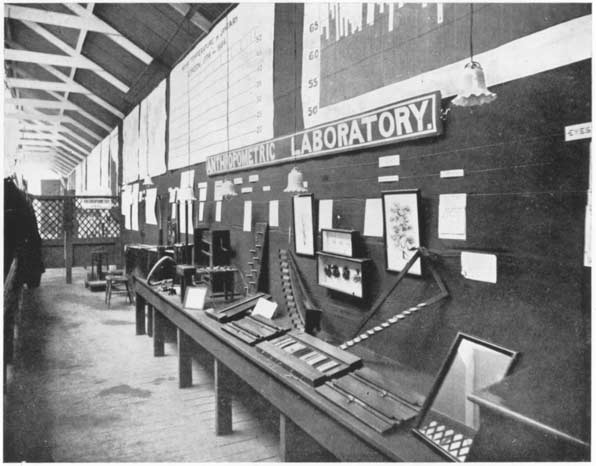
Galton’s fictitious Eugenic College underpins the real role that educational institutions play in preserving and propagating eugenic imaginations, with the contemporary academy being an important context for critiquing the ongoing systems, epistemologies, and politics embodied by education. Galton’s dystopian-utopian vision no longer takes place in Kantsaywhere; it is no longer nowhere, and maybe never really has existed anywhere other than all around us. The name itself exudes a violent everywhere-ness that attempts to both globalize and obfuscate its eugenic imagination. The where of our bodies, constantly subjected to a form of locatedness, of surveillance, of identification, of desired legibility, subverts our ability to truly inhabit what Saidiya Hartman calls the “nowhere of utopia.”22 Galton’s Eugenic College, where education acts as the tool for defining the who of the nation, is also now manifest in the site of the contemporary academy through multiple forms of direct and nefarious systems of violence: the who and the where co-constituted.
As explored by Taylor Miller, the neoliberal academy has increasingly become a primary site and source of technological and epistemological militarization,23 which actively contributes to the debilitation of people the world over. Nowhere is this more visible than in Gaza, where space, education, and the ruination of people collide with the bombs launched from the academy, falling on the academy. The scholasticide carried out by Israel, its violent destruction of schools and educational infrastructures of all kinds,24 highlights the academy not only as the source of technological brutality but as exploited targets of infrastructural and epistemological eugenics themselves. The destruction of education, itself both space and right, seeks to dismantle resistance that resides and builds in the form of knowledge and praxis. The British Palestinian author Isabella Hammad critically underpins scholasticide in the following:
Israel’s war in Gaza targets not only memory, knowledge, and critical inquiry but also extends to the destruction of educational institutions where history exposes past crimes and the movements for liberation and resistance. This is a war waged not just against bodies but also against history itself—against memories, legacies of cruelty, schools, museums, and any space where a people’s history and collective identity are preserved and transmitted to present and future generations. This assault on historical consciousness, remembrance, critical ideas, and the enduring history of settler colonialism represents a form of ideological violence that strategically underpins the tangible, bloody war that destroys Palestinian lives and the institutions safeguarding vital memories. In this context, the concept of “scholasticide” emerges, signifying the deliberate destruction of educational spaces that pass on essential knowledge, memories, and values, becoming a central element in Israel’s broader war against the Palestinian people.25
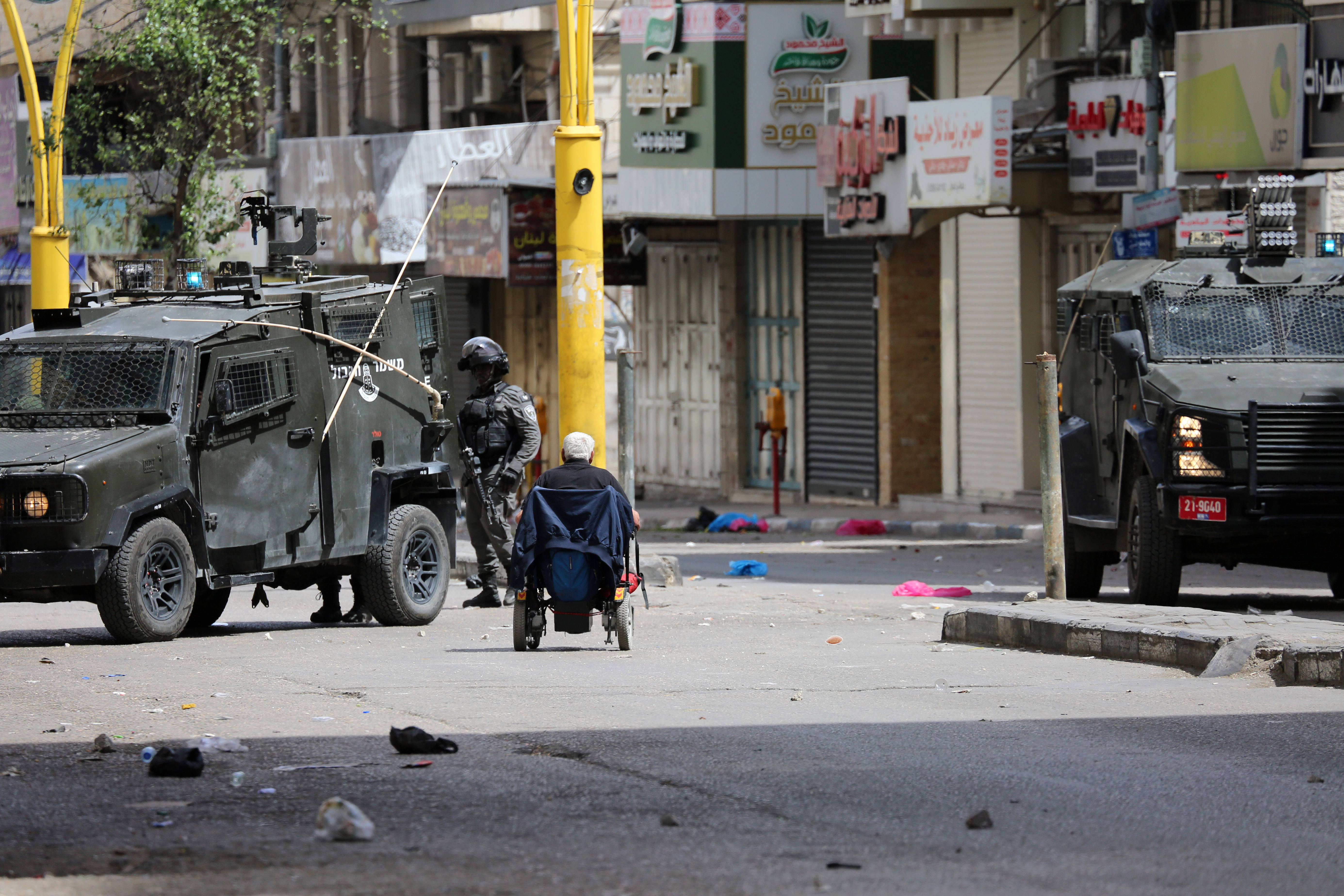
Yasmin Snounu has explored the effect of genocidal violence on education for disabled people in Palestine, not only through direct violence against them or the destruction of educational spaces, but through the Israeli-controlled checkpoints and imposed limitations on urban mobility.26 The transnational violence of the academy, from its militarization to its targeting, has created a site of ongoing threat. Galton’s college, in its conceptualization of eugenics mobilized between everywhere and nowhere, opens up potential for a counter, fugitive response, where Kantsaywhere can be reconfigured. I want to introduce here a pedagogical call to consider alternative practices and pedagogies of countersurveillance, fugitivity, liberation, and abolition born from disability and debility; to consider how the academy and its para-institutions may, to follow Fred Moten and Stefano Harney, provide a site for these fugitivities. I want us to consider the ways in which the surveillance of disability and the consequent attempts at fugitivity challenge citizenship and how the ongoing-ness of life and agency after death acts as a rebellion against the deletive intention of eugenics.27
Cripping the Nation-State
If disability is considered a drain on the nation, either fundamentally (disability as inherently unproductive) or constructed (debility as a consequence of violence), then citizenship can be considered as nothing more than a captive necropolitical framework, where the sustainment of living is not considered the moral obligation or ambition of the nation-state but an immoral biopolitical tool of power.
The contradiction at the heart of citizenship is that it simultaneously constructs a body politic regulated by geographical and legal boundaries and proliferates a construction of rights that depends on the state itself. In Rethinking Statehood in Palestine, Leila Farsakh explains that “the nation state was conceived as the internationally recognized sovereign entity that ensures citizens their political rights, including their right to security and protection from external domination.”28 But this concept of sovereignty and protection has been dismantled, with debility as the consequence of transnational and settler colonial acts of violence. The crip transnational consequences of, for example, the deconstruction of welfare in one nation-state (e.g., the UK) being used to fund militaristic production and genocide against another nation-state’s (Palestine) citizens, and equally in support of a third that is conducting said genocide (Israel), speaks to the ways in which the broader construction of citizenry is subverted by far-reaching questions of individual and geopolitical morality.29 The ongoing genocide in Palestine, the literal disabling of an entire population, leads us to challenge how disability—alongside other social-historical questions regarding citizenship in Palestine—spatially and politically reformulates the way nation-ness is imagined. For if we consider the thinking of Benedict Anderson in Imagined Communities, in which he argues for the imagined and unequivocally accepted existence of the nation- state,30 a historical formation rooted in the construction of an imaginary, idealized citizen, then disability, or the debilitated citizen, challenges this imagination.
This line of inquiry brings us to the questioning of conventional statehood: In places where debility is produced and exploited, what does a disabled citizenship mean? This question does not suggest moving toward the acceptance of debility and disability as a progenitor to the production of nationhood but instead the praxis of disability as the production of a citizenship of solidarity. What would it mean to crip the idea of the nation-state? Are we calling for the reimagination of citizenship, or its deconstruction and reconstruction into something else entirely? This, maybe, is the first pedagogical question we must attend to.
Historically, visions of a crip form of statehood have not been able to disentangle themselves from, or have been integrally rooted in, the colonial imagination, racial discrimination, or settler ideology. In 1855, John Flournoy, a Deaf anti-abolitionist, formulated a proposal for the formation of a Deaf state in the western United States. Esme Cleall explains that the proposed state was called many names—Deaf-Mutia, Gesturia—but most prominently, Gallaudetia.31 It was not without its opponents: The majority of the Deaf community was against the proposal, favoring instead practices of integration. Flournoy was also a prolific advocate for the continuation of slavery, and his imagined Deaf state specifically excluded Black communities from its citizenry. His vision of a Deaf state was constructed and considered “at the expense of the (often invisible) indigenous other”32 and built on conventional expansionist and colonial visions of taking land from Indigenous communities. Esme Cleall argues: “The fantasy of deaf territories is a powerful subversion of ideas of imperialism that envisaged conquering new lands for the imperial race.”33
The reasoning for a Deaf state was centered more around the linguistic and cultural identity it would enable, and less on the spatial statehood created by a Deaf community. And yet, as Cleall explains, Flournoy’s vision was not alone in its confluence of Deaf statehood and a settler imagination that saw space and land as a tool for developing it. Reflecting on Deaf British advocate and colonist Jane E. Groom’s A Future for the Deaf and Dumb in the Canadian North West, Cleall discusses how Groom’s scheme was emboldened by settler ideas‚ using “the imaginary and practices of colonialism to imagine a place of freedom and prosperity, in this case the creation of deaf space.”34 With the value of land tied to the creation of property and civility—and thus ableist human ideals of labor and productivity—settler colonialism was itself detrimental to disabled communities. But other imaginations of statehood, centered on Deafness, have been situated or arisen in opposition to oppression and imperial powers. Take, for example, the Deaf poet Ilya Kaminsky’s Deaf Republic.
Kaminsky constructs a world in which silence is both affliction and arsenal, in which Deafness is imagined as both metaphor and material condition. The fictional town of Vasenka—its squares, bedrooms, and balconies—becomes a theater of resistance, where the architecture of daily life is repurposed to stage a new kind of citizenship: one rooted not in speech or legality, but in the shared, material vulnerability and collective resistance to military occupation.
This resistance hinges on an act of state violence. Deaf Republic opens with a soldier shooting a Deaf boy, Petya, during a protest. In response, the town collectively “goes deaf,” adopting sign language as a mode of defiance. Deafness is no longer considered a marginal condition—it becomes the dominant mode of expression, turning the auditory logic of authoritarian control (shouted commands, gunshots, public orders) into ambient background noise. Disability, Deafness, is reconfigured as a strategic modality, disrupting the normative spatial order of the occupied city. Vasenka’s built environment becomes a site of surveillance and intimacy. The public square—once a space of civic gathering—is recast as a zone of trauma, the site of the brutal rupture. Windows and balconies expose the community to the gaze of soldiers, and private gestures risk becoming political acts. The visual language of sign—described, visualized, and spatialized—redefines these spaces not as mute or empty but as spaces and acts of the subaltern.
In Vasenka, to be a citizen is not to vote or to speak freely but to occupy space differently, to repurpose the civic sphere through embodied resistance. The deafness of the townspeople is a tactical silence in the absence of democratic infrastructure. Kaminsky does not sentimentalize disability; rather, he stages it as a confrontation with the architectures of power. Deafness becomes a spatial strategy, a reorientation of the body through which emerges a radical form of civic architecture—built not from concrete or steel, but from gesture, refusal, and solidarity.
Colonial Phantoms
Until a completely new politics—that is, a politics no longer founded on the exception of bare life—is at hand, every theory and every praxis will remain imprisoned and immobile, and the “beautiful day” of life will be given citizenship only either through blood and death or in the perfect senselessness to which the society of the spectacle condemns it.
—Giorgio Agamben, Homo Sacer35
To be an amputee is not to lack, whether a limb or a hospital, but to be deconstructed in a moment of ineffable ruination; to be amputated by settler colonial violence does not require an acceptance of this absence—of this destruction—as inevitable. Reconfiguring Frantz Fanon’s metaphorical but highly material use of amputation, Alia Al-Saji argues that, beyond lack, it “extends what racializing debilitation means and makes tangible the prosthetics that colonialism imposes and the phantoms and affects of colonized life that it attempts to sever.” There are, and have now been for some time, and will most likely continue to be with the world’s ongoing complicity, more child amputees in Gaza per capita than anywhere else in the world.36 Amputation becomes more than a dissection of the colonized body. Amputation attempts to sever the body from the body politic—“colonialism debilitates and amputates not only the present but also the past; more precisely, it construes present amputation as actualizing a sequel—becoming-disabled due to a vulnerability, lack or fault (‘an impurity or flaw [tare],’ BSWM 107/110/89) already inscribed in colonized being—and forgets the sociogenic and eugenic processes of colonial debilitation through which this comes about.”37
Disability and debility on their own do not subtract one from the body politic. Rather the ecologies of extended violence—the blockades, infrastructure destruction, and immobilization—are what attempt to make the disabled body a static, if not obliterated, citizen. Jasbir Puar shows how “the production of variegated and uneven metrics of bodily capacity and debility in Palestine is neither incidental nor the unfortunate effect of collateral damage but is intrinsic to the functioning of settler-colonial occupation.”38 Debility is adopted as not only a form of bodily destruction but also an attempted destruction of personhood itself. The genocide in Palestine has concurrently created as well as targeted disability through the debilitation of spatial infrastructures necessary for mobility and survival.39 This targeting contributes to what Jasbir Puar calls “slow death” and “captures how systemic conditions, such as poverty, infrastructural decay, and political violence, erode health, mobility, and agency over time,” wherein “disability is not only a long-term consequence of the occupation, but also an intentional outcome of it. It is embedded in the political architecture of control and serves as both a method and a marker of the ongoing colonial violence inflicted upon the Palestinian population.”40 This is what, to build from Fanon, Alia Al-Saji calls a colonial prosthesis,41 wherein “amputation should be read as a technology of disciplining and readying bodies for colonial prosthesis—debilitating ways of life so that such prosthesis is needed (as perceptual, conceptual, spatial, and temporal schemas). I propose that the colonial past is prosthetic, a dimension through which we have learnt to perceive.”42
Contemporary critical and crip theory offers a constellation of frameworks through which to understand the entanglements of architecture, debility, and citizenship under late capitalist and carceral regimes. Jina B. Kim’s thesis “Anatomy of the City: Race, Infrastructure, and U.S. Fictions of Dependency” explores the infrastructures of care,43 which emerge as both a critique and a counterproposal to state neglect. Kim draws attention to the way disabled, racialized communities build informal, often invisible networks of support amid multiple forms of structural abandonment. These infrastructures challenge dominant spatial imaginaries that associate care with the clinic or institution, situating care instead among the dispersed and subversive spaces of kitchens, porches, sidewalks—redefining citizenship not as access to formal rights and infrastructures as supplied by the state but as interdependence maintained within and against hostile architectures. Kim draws and builds on Henry Giroux’s biopolitics of disposability, which argues that, under neoliberal governance, entire populations—racialized, poor, disabled—are rendered disposable, excluded from the social contract44 not by accident but by design. Referencing the impact and response to Hurricane Katrina on disabled, racialized communities in New Orleans, Giroux writes:
The bodies that repeatedly appeared all over New Orleans days and weeks after it was struck by Hurricane Katrina laid bare the racial and class fault lines that mark an increasingly damaged and withering democracy and revealed the emergence of a new kind of politics, one in which entire populations are now considered disposable, an unnecessary burden on state coffers, and consigned to fend for themselves.45
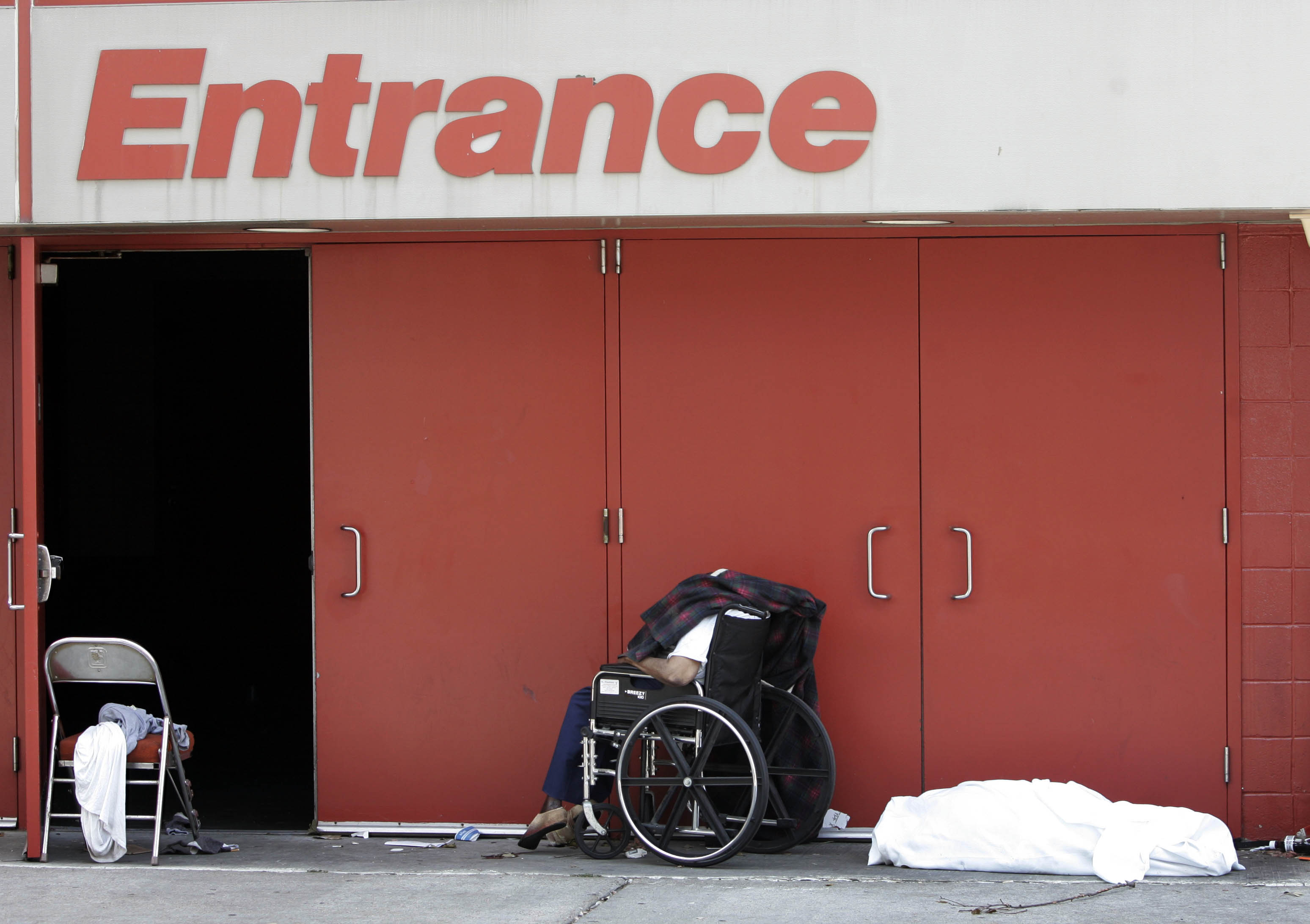
These disposabilities are not only exemplified through ruinated spaces, but are themselves spatialized: schools are defunded, hospitals shuttered, housing neglected, communities left to flood. Architecture becomes not merely a backdrop to state neglect but an instrument in the production of debility, what Puar describes as slow, state-sanctioned bodily decline. “Slow death” can be considered as the slope toward Giorgio Agamben’s concept of bare life, life stripped of political and legal protections and exposed to sovereign violence46—a violence that takes root in the “camp” —“ ‘zone of indistinction between law and violence’—where bodies located in exceptional spaces are stripped of citizenship rights and embody ‘bare life.’ ”47 The camp is the paradigmatic space where citizenship collapses into mere survival. Yet this concept risks universalizing what is in fact highly stratified: not all are made “bare” in the same way. Kim and Erevelles complicate Agamben by centering the specific material and racialized conditions under which life becomes ungrievable, disposable, or where debilitation is normalized. Erevelles brings a historical materialist framing that locates the disabled body within the global circuits of capital accumulation where disability is not a fixed identity but a social relation produced by the violent unevenness of racial capitalism: War, colonialism, labor exploitation, and educational apartheid all generate bodily difference that is then stigmatized or rendered surplus. The built environment—homes, prisons, schools, factories—is central to this process. Architecture doesn’t merely reflect disability exclusion or eradication; it conditions and amplifies it, encoding capital’s need to differentiate and devalue bodies. Erevelles and Adams force us to consider “the material and discursive implications of how we understand the role of systems and institutions of punishment in these unexpected spaces of confinement.”48 For them, the “camp” as defined by Agamben is not a relic of the past but instead describes a contemporary “spatial theory of power.”49
Eugenics is employed in both the destruction and creation of spaces; schools segregated, schools destroyed, hospitals hidden, hospitals annihilated. Agamben again: “Not only is the colonized body contingent on spatial organization but the power of colonial society is deeply embedded and perpetuated in the environment.”50 But challenging the spatial politics of citizenship, particularly for disabled and marginalized populations, is less about including people into existing frameworks than about redefining the very infrastructures—of care, of space, of value—through which lives are rendered livable. To address debility through architecture, then, is not to “accommodate” but to dismantle the architectures of abandonment and reimagine the built world as a site of radical interdependence.
At the epicenter or crossing point of Giroux’s biopolitics of disposability, Jina B. Kim’s infrastructures of care, Nirmala Erevelles’s historical materialist framing of the disabled body, and finally Giorgio Agamben’s bare life, are the architectures we live in, from homes filled with life to homes turned to rubble. But what states of exception exist under the radar of common perception? How do we reveal, resist, and reimagine these states and architectures of exception? We can return to Alia Al-Saji and the potential of an anticolonial prosthesis, as a “socio-diagnostic (BSWM 11/11/xv) and therapeutic (97/100/80)—meant to allow us to feel the affects dismembered, phantoms disavowed, flesh debilitated by colonialism”51—and when these prostheses are applied to architectures, to typologies, to worlds, they become, to follow Kim, infrastructures of not only care but of resistance.
The process of removal is always eugenic, sometimes in the violent, imperial vision of a pure humanity, other times in imagining or constructing the purity of place. We can see this in the ongoing genocidal removal in Gaza, the foremost example of debility’s entanglement with citizenship, statehood, and personhood centered on the debilitation and maiming of citizens. Here the settler colonial and eugenic imagination converges through the exploitation of urban space, the control of movement, and the brutalization. We can also see this in the research of Adria Imada’s An Archive of Skin, An Archive of Kin, which explores the longest medical quarantine in modern history: the expulsion and institutionalization of Hawaiian citizens diagnosed with Hansen’s disease, sent to isolated lepers’ settlements on the island of Molokai.52 But what Imada also provides through her extensive investigation is the anticolonial prosthesis embodied in the liberatory minutiae of rebellious material, the ginger blossom of the Lei ʻawapuhi53 emanating from medical photographs taken over years of incarceration.54 These scents not only embody the familial settlements of this incarcerated community; they also represent and embody an ongoing personhood both captured and resistive to colonial capture.
A Call for Unreliable Citizens
Even in the face of continued crisis, it is necessary to dream. It reminds me that, even in the face of death, we must continue to inhabit many rooms, to hold space where we can be honest, where we can be our whole selves. Where we can feel alive.
—Caleb Azumah Nelson, “Notes on a Crisis”55
What pedagogical methods can we employ to enable (rather than make reliable) disabled citizens and their constitutive fugitivities? How do these pedagogies, imagined in and through spatial histories and contexts, allow a critical imagining of personhood? The normality we see projected onto both bodies and spaces stemming from colonial and imperial ideas of citizenry can be read as imposed, realized fictions, or, as Samuel Clowes Huneke writes, “as nothing more than a fiction wormed into our very sense of self.”56 As disabled citizens, to assimilate or conform to neoliberal, capitalist, and colonially derived ways of being in, producing, or being contained within space is to accept existing structures of power. In this sense, to negate this acceptance, solidarity can be read as pedagogical,57 a praxis in which we learn from those communities we exist in solidarity with. Through this we can begin to contemplate the fundamental questions: Where do we cease to be citizens? What are the boundaries, conditions, and prerequisites for liberation? What spaces, geographies, movements, and bodies does citizenship transverse? Where can citizenship be continually rethought, in life and beyond it? Where do we cease by force? Where do we cease by choice?
The question and spatiality of where we cease to be citizens echoes Samuel Beckett’s contemplation in The Lost Ones: “Abode where lost bodies roam each searching for its lost one. Vast enough for search to be in vain. Narrow enough for flight to be in vain.”58 To consider crip personhood is to center the uncertain futures of one’s own body and of others—bodies that in their indeterminate futurity roam together a borderless land, destined yet improbable to meet one another. Their histories never coincide, albeit by the very fundamental nature of their inevitable uncertainty. What is the geography, smell, taste, breadth, weather of this future wandering land that we can only imagine ourselves in? How does the sea meet the coast, does the coast sweep around crumbling cliffs or tremble inward in sways? What does it mean to roam beyond these states? What does it mean to be lost?
To become what we might call “unreliable citizens,” I want to argue that we must learn together and learn from one another—what Mahdi Sabbagh refers to as mutuality: “a tactic that first requires and then further enables communities to listen and learn from one another to form ideological ties, coalitions, and triangulations of knowledge exchange.”59 What solidarities can be born from the diversely mutual threats disabled and debilitated folks bear to our collective be-ings? Mutuality, however, is troubled in the disability sphere by the ways in which constructions and perspectives on what constitutes the disabled body (and consequently what constitutes citizenship) are muddied by transnational conditions and productions of disability. How can solidarity be built in response to this tension?
In Disability Nationalism in Crip Times, Robert McRuer argues that “recognition of bodies beyond boundaries, bodies not (yet) legible according to the terms of our canonical claims—will continue to open up new horizons for thought and action, for solidarity and coalition.”60 Considering how space, disability, and citizenship converge opens up a new pedagogical approach that may create an unreliable, destabilized, empowered form of, per H. L. T. Quan, ungovernability.61 Being ungovernable can be thought of or imagined as subverting capitalist and imperial infrastructures, and conceiving what spatial liberations are possible via the epistemological powers of the disabled demos.
So, to that end, what role do spatial pedagogies play, where does or can pedagogy be enacted, and how can it counter the historically rooted desire to build citizens through state-led, colonial-rooted structures and infrastructures of education? Disability, especially cognitive disability, has sat centrally in disability theory to question the capacity-based foundations of rights and citizenship as exemplified in the political theory and philosophical works of John Rawls. In A Theory of Justice, Rawls justifies “the exclusion of persons with disabilities from his definition [of citizenship], because he relies on the humanist logic that emphasizes individual potential and its associated traits of autonomy, competence, and rationality as the necessary preconditions for being recognized as a citizen.”62 In response, Erevelles argues that:
If citizenship education involves teaching students to successfully negotiate the complexities of diverse identities in order to achieve the moral status of “abstract citizen” (Gordon, Holland & Lahelma, 1999), then how do persons with cognitive/severe disabilities disrupt this idealistic conceptualization? What implications will these disruptions have for traditional notions of citizenship and citizenship education?63
This disruption of idealism and abstraction speaks to the value of disability in countering logics, which attempt to construct personhood and value to the state around normality. This counter-epistemology of citizenship can find life in the practice of decolonial pedagogies, which equally attempt to challenge education’s oppressive praxis. Turning to decolonial pedagogy to address this role and the spatial implication of education, Enrique Dussel’s The Pedagogics of Liberation64 sets out the key elements for a philosophy of liberation: the central focus on material life, the creative capacity of victims, and the need for a democratic epistemology to reach beyond the exteriority of the current system.65 To decolonize pedagogy, Dussel makes two core methodological shifts: a shift to a naturalized theoretical approach to education, and a shift from ideal to nonideal approaches. The first takes the perspective of the key material quality of learning, the cross-generational encounter that requires rooted and local input from the cultural community. This spatial preference is vital to understanding education as a contextual praxis. Distinct from the first point, the nonideal approach is primarily prescriptive and prioritizes taking real- world conditions to local contexts to craft pedagogical prescriptions. In regard to questions of disability and debility, these methodologies center conditions that are local and cultural in understandings of the bodymind—transnational conceptualizations of embodiment that challenge the liberal, rights-based prescriptions of disability in western contexts. Here, Dussel moves us from an abstract conception of personhood and education to one established through and in relation to space. Space, context beyond the institution, becomes the site through which a civic form of pedagogy is created.
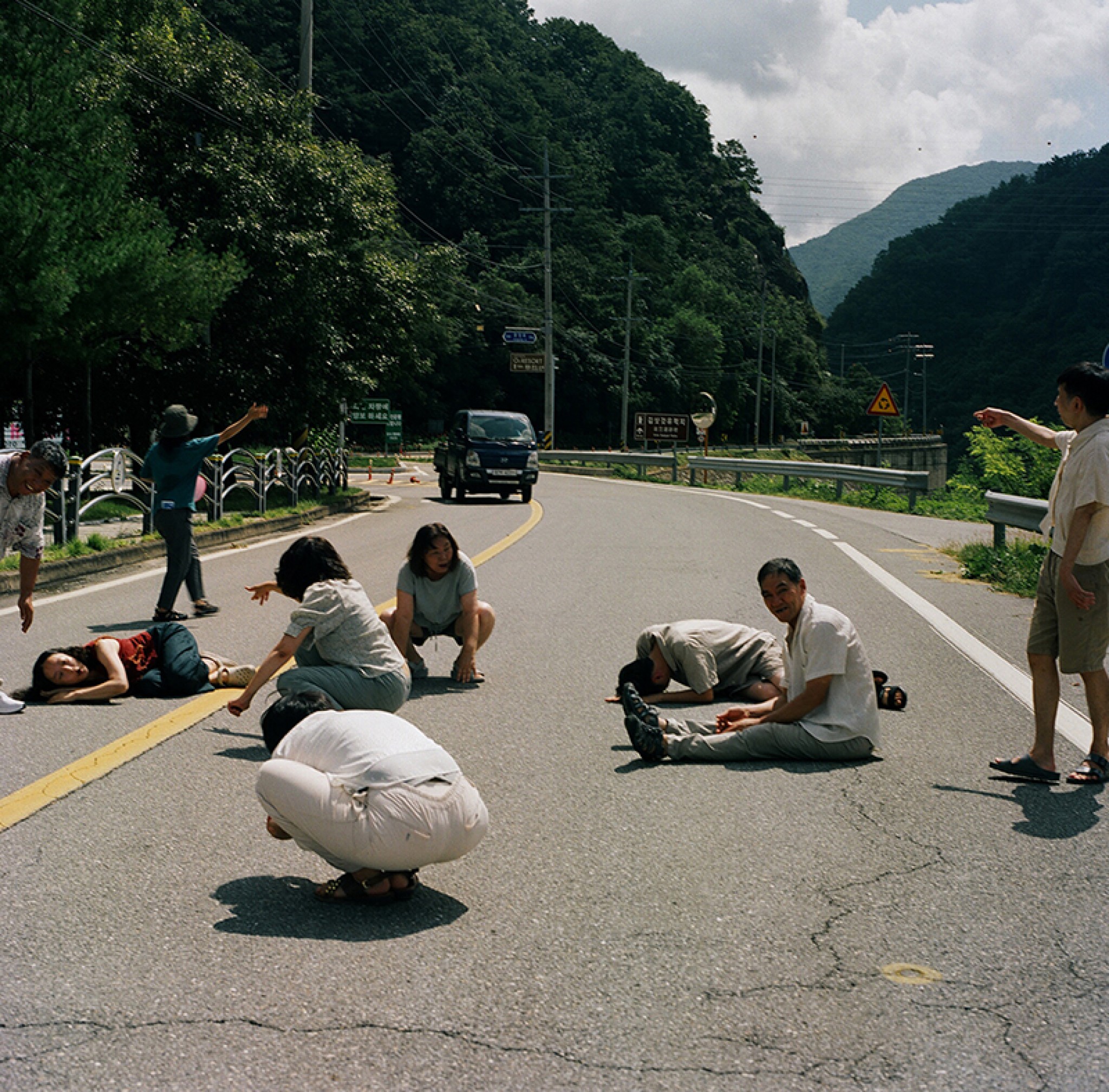
Whether provoking Benedict Anderson’s conceptualization of the imagined community with alternative, disabled constructions or reimaginations of citizenship, or sitting with the townspeople of Vasenka in the literal, though fictitious, formation of a Deaf citizenship, we must follow the epistemological and methodological scaffolding set out by Erevelles “to explore how the body, particularly the disabled body, is constituted within the social relations of production and consumption of transnational capitalism, and to foreground the implications these social/economic arrangements have for making bodies matter (or not).”66
We must inquire into how space and its institutional, para-institutional, and counterinstitutional forms of pedagogy can sit at the grounding of this thought. Among the ephemeral materialities of history, across borders and geographies, there are built, unbuilt, and ruined spaces that have and continue to embody transnational stories of social and economic oppression—a spatial pedagogy for the disabled body politic must begin to integrate and interrogate these material considerations. But it must also stem from deep considerations of personhood, narrations, and trajectories of citizenships and lives lived, unlived, and lived-beyond ongoingly, where “from graves to monuments, archives, rituals, stories and dreams the dead live on—continuing to commune with the living, sometimes nurturing them and the natality of an unknown future.”67 These considerations lead us to ask: How do we embed these stories within our imaginations and construction of space, citizenship, and crip personhood through spatial pedagogy? How does the question of where we cease to be citizens materialize not only in a critique of abjection but in the imaginations of subversion?
-
Mahmoud Darwish, “The Passport,” Leaves of Olives (1964), link. ↩
-
Roger Robinson, “Citizen I,” in A Portable Paradise (Leeds: Peepal Tree Press, 2019), 43. ↩
-
Samuel Beckett, The Lost Ones (New York: Grove Press, 1972), 7. ↩
-
Edouard Glissant, Sun of Consciousness (Brooklyn, NY: Nightboat, 2020), 16. ↩
-
Sami Schalk, and Jina B. Kim, “Integrating Race, Transforming Feminist Disability Studies,” Signs: Journal of Women in Culture and Society 46, no. 1 (2020): 31–55. 41. Quoting from Julie Avril Minich, Accessible Citizenships: Disability, Nation, and the Cultural Politics of Greater Mexico (Philadelphia: Temple University Press, 2013), 2. Also, as Schalk argues elsewhere, “Disabled people know how to survive this. Our knowledge is part of how we as a collective not only make it to the other side but also build a new world that is more capable of responding with care for all of us, not just some of us.” See Sami Schalk, Black Disability Politics (Duke University Press, 2022), 160. ↩
-
Here I follow the work of José Henrique Bortoluci in What Is Mine. Bortoluci considers personhood by narrating his father’s cancer alongside national histories of Brazil’s political and infrastructural struggles. “How do you narrate the life of an ordinary man? I’m hindered by the silence of the sources, the erasure of any records of the people who build the world, who write their stories with their hands and feet, with words that are spoken and sung, with sweat and blemished skin. I try to enter the territory of the constant coming and going of those who hardly ever took photos, or wrote journals, or gave interviews, or were filmed. I searched, as Bertolt Brecht suggests we do, for the ones who build the palaces and the walls, not the nobles and generals who command them; the cooks, drivers, gardeners and cleaners, not the dignitaries in the halls of power.” José Henrique Bortoluci, What Is Mine (London: Fitzcarraldo Editions, 2024), 24. ↩
-
This includes but is not limited to: Julie Avril Minich, Jina B. Kim, Mel Chen, Nirmala Erevelles, and Dennis Tyler. ↩
-
Nirmala Erevelles, Disability and Difference in Global Contexts: Enabling a Transformative Body Politic (New York: Palgrave Macmillan, 2011), 134. ↩
-
Jess Whatcott, Menace to the Future: A Disability and Queer History of Carceral Eugenics (Durham, NC: Duke University Press, 2024). ↩
-
Sunaura Taylor, Disabled Ecologies: Lessons from a Wounded Desert (Berkeley: University of California Press, 2024). ↩
-
Jasbir K. Puar, The Right to Maim: Debility, Capacity, Disability (Durham, NC: Duke University Press, 2017). ↩
-
Julie Avril Minich, Radical Health: Unwellness, Care, and Latinx Expressive Culture (Durham, NC: Duke University Press, 2023). ↩
-
For more on conservation, see Rosemarie Garland Thomson, “The Case for Conserving Disability,” Journal of Bioethical Inquiry 9, no. 3 (2012): 339–355. ↩
-
López-Durán’s Eugenics in the Garden explores the translation of eugenic ideas to South American urban design in the twentieth century, with ideas of health crafting politically driven approaches to public space. The book does not make mention explicitly of eugenics in relation to disability. Fabiola López-Durán, Eugenics in the Garden: Transatlantic Architecture and the Crafting of Modernity (Austin: University of Texas Press, 2018). ↩
-
López-Durán, Eugenics in the Garden, 19. ↩
-
Lennard J. Davis, Enforcing Normalcy: Disability, Deafness, and the Body (New York: Verso, 1995). ↩
-
James C. Scott, The Art of Not Being Governed: An Anarchist History of Upland Southeast Asia (New Haven: Yale University Press, 2009). ↩
-
Khawam speaks of liberation movements for and led by disabled communities during the 2019 uprising in Lebanon and ongoing resistance struggles against “governmental incompetence and corruption, and the state’s sustained inability to provide basic rights to its citizens, residents, and communities.” Grace Khawam, “ ‘What About Us?’ The Unheard Voices of the Lebanese Revolution,” Kohl: A Journal for Body and Gender Research 6, no. 2 (November 2020): 221–229, link. ↩
-
López-Durán, Eugenics in the Garden, 22. ↩
-
As explored in Lennard J. Davis, “Constructing Normalcy: The Bell Curve, the Novel, and the Invention of the Disabled Body in the Nineteenth Century,” in The Disability Studies Reader, ed. Lennard J. Davis (London: Routledge, 1997), 9–28. ↩
-
Jina B. Kim, “ ‘People of the Apokalis’: Spatial Disability and the Bhopal Disaster,” Disability Studies Quarterly 34, no. 3 (2014). ↩
-
Saidiya V. Hartman, Wayward Lives, Beautiful Experiments: Intimate Histories of Social Upheaval (New York: W. W. Norton, 2019), xiii. ↩
-
“As the scholar of Israeli-developed systems of militarism Maya Wind elucidates, universities are complicit in Palestinian unfreedom. These insidious relationships—while hardly limited to Ben-Gurion University, Tel Aviv University, and well-known US universities—show the academy’s complicity in (and even commitment to) the prolongation of Palestinian suffering and concurrent profit maximization for stakeholders, sometimes quasi-disguised as philanthropic and educational initiatives but always in the interest of shareholders’ bottom line.” Taylor Miller, “Silicon Wadi, Silicon Desert,” Avery Review 70, link. ↩
-
See Henry A. Giroux, “Scholasticide: Waging War on Education from Gaza to the West,” Journal of Holy Land and Palestine Studies 24, no. 1 (2025): 1–16. ↩
-
Isabella Hammad, “Acts of Language,” New York Review of Books, June 13, 2024, link. ↩
-
See Yasmin Snounu, “Disability and Higher Education in Palestine,” Journal of Culture and Values in Education 2, no. 3 (2019): 61–78; Yasmin Snounu, Phil Smith, and Joe Bishop, “Disability, the Politics of Maiming, and Higher Education in Palestine,” Disability Studies Quarterly 39, no. 2 (2019); Yasmin Snounu, “A Critical Ethnographical Exploration of Disability Under Apartheid Conditions: The Promising Potential of Palestinian Higher Education Institutions” (PhD diss., Eastern Michigan University, 2019); Yasmin Snounu, “Defying Exclusionary Democracy Through Resilience in Palestinian Higher Education,” Journal of Culture and Values in Education 2, no. 3 (2019): 61–78. ↩
-
This fugitive action, such as through interrelations between disability and race, can be seen through the work of the artist Donald Rodney (1961–1998), extending between the scales of the body and the state. One exploration of the posthumous inhabitation of the body politic was via Autoicon, Rodney’s machine learning–centered artwork developed by friends, formed primarily of the vast and comprehensive medical documentation of Rodney’s life, which details his life’s interaction with the techno-social apparatus of health infrastructures. His work forces us to engage with how bodies are sustained or disappeared. ↩
-
Leila H. Farsakh, ed., Rethinking Statehood in Palestine: Self-Determination and Decolonization Beyond Partition (Oakland: University of California Press, 2021), 3. ↩
-
Edward L. Rubin, “The Dangers of Citizenship,” in The Future of Citizenship, ed. Jose V. Ciprut (Cambridge, MA: MIT Press, 2008), 287–310. ↩
-
Anderson argues that nations are imagined “because the members of even the smallest nation will never know most of their fellow-members, meet them, or even hear of them, yet in the minds of each lives the image of their communion.” ↩
-
Esme Cleall, Colonising Disability: Impairment and Otherness Across Britain and Its Empire, c. 1800–1914 (Cambridge: Cambridge University Press, 2022). ↩
-
Cleall, Colonising Disability, 168. ↩
-
Cleall, Colonising Disability, 179. ↩
-
Cleall, Colonising Disability, 169. ↩
-
Giorgio Agamben, Homo Sacer: Sovereign Power and Bare Life (Stanford, CA: Stanford University Press, 1995), 11. ↩
-
“Beyond the mass death, international agencies suggest that at least 110,000 people in Gaza have been injured, including at least 25,000 children. And Unicef estimates that between 3,000 and 4,000 children in Gaza have had one or more limbs amputated. That small tract of earth is now home to more child amputees per inhabitant than anywhere else in the world.” Ahmed Moor, “There Are More Child Amputees in Gaza Than Anywhere Else in the World. What Can the Future Hold for Them?” The Guardian, March 27, 2025, link. ↩
-
Alia Al-Saji, “A Debilitating Colonial Duration: Reconfiguring Fanon,” Research in Phenomenology 53, no. 3 (2023): 279–307. ↩
-
Jasbir K. Puar, “Spatial Debilities: Slow Life and Carceral Capitalism in Palestine,” South Atlantic Quarterly 120, no. 2 (2021): 393–414. ↩
-
“In the Gaza Strip and the West Bank, Israeli military operations have disproportionately affected disabled people through the destruction of assistive devices, inaccessible evacuation routes, and deaths resulting from a lack of essential medical care. Overcrowded shelters lack toilets accessible to wheelchair users, and humanitarian efforts frequently overlook the specific needs of disabled people. Deaf and Blind individuals often receive no warnings of forthcoming strikes, leaving them particularly vulnerable during military attacks.” Femke Beutels and Mirre Verhoeven, “Contextualizing Disability: Settler-Colonial Power and the Production of Impairment in Palestine,” DiGeSt—Journal of Diversity and Gender Studies 12, no. 1 (2025): 17. ↩
-
Beutels and Verhoeven, “Contextualizing Disability,” 17. ↩
-
Al-Saji, “A Debilitating Colonial Duration.” ↩
-
Al-Saji, “A Debilitating Colonial Duration,” 298. ↩
-
Jina B. Kim, “Anatomy of the City: Race, Infrastructure, and US Fictions of Dependency” (PhD diss., University of Michigan, 2016). ↩
-
The concept of the social contract has been tackled from both the perspective of race by Charles W. Mills in The Racial Contract, and disability in Stacy Clifford Simplican, The Capacity Contract: Intellectual Disability and the Question of Citizenship. ↩
-
Henry A. Giroux, “Violence, Katrina, and the Biopolitics of Disposability,” Theory, Culture & Society 24, no. 7–8 (2007): 305–309, 307. ↩
-
Giorgio Agamben, State of Exception (Chicago: University of Chicago Press, 2008). ↩
-
D. L. Adams and N. Erevelles, “Unexpected Spaces of Confinement: Aversive Technologies, Intellectual Disability, and ‘Bare Life,’” Punishment & Society 19, no. 3 (2017): 1. ↩
-
Adams and Erevelles, “Unexpected Spaces of Confinement,” 3. ↩
-
Adams and Erevelles, “Unexpected Spaces of Confinement,” 9. ↩
-
Keto Gorgadze, “Secret Technology of Resilience,” Errant Journal, no. 7, 128. ↩
-
Al-Saji, “A Debilitating Colonial Duration,” 306. ↩
-
Adria L. Imada, An Archive of Skin, An Archive of Kin: Disability and Life-Making During Medical Incarceration (Berkeley: University of California Press, 2022). ↩
-
Adria L. Imada, “Promiscuous Signification: Leprosy Suspects in a Photographic Archive of Skin,” Representations 138, no. 1 (2017): 1–36, 24. ↩
-
“These strands of ginger blossoms would have filled the clinic with perfume, offering a sensory experience of the wet valleys that produce them. For thirteen-year-old Cecelia Kalili Naea (fig. 18), who hailed from such a lush locale, Kapena in Nu‘uanu Valley, the scent would have recalled her own home and her kin, just a few miles away from the clinic. [...] Their portraits, then, documented each individual patient’s imminent emergence as a criminal suspect, as well as the growing bonds with one another—a new collectivity born out of violent dislocation. These gestures within and just outside the frame were acts of love, connection, and farewell prior to exile. The photographs anticipate the affective possibilities of touch and physical proximity that patients would experience and recreate in communities at the leprosy settlement.” Imada, “Promiscuous Signification,” 28. ↩
-
Caleb Azumah Nelson, “Notes on a Crisis,” Whitechapel Gallery, February 10, 2025, link. ↩
-
Samuel Clowes Huneke, A Queer Theory of the State (Berlin: Floating Opera Press, 2023). ↩
-
Mahdi Sabbagh, ed., Their Borders, Our World: Building New Solidarities with Palestine (Chicago: Haymarket Books, 2024). ↩
-
Beckett, The Lost Ones. ↩
-
Sabbagh, Their Borders, Our World, 13. ↩
-
Robert McRuer, “Disability Nationalism in Crip Times,” Journal of Literary & Cultural Disability Studies 4, no. 2 (2010): 163–178, 176. ↩
-
H. L. T. Quan, Become Ungovernable: An Abolition Feminist Ethic for Democratic Living (London: Pluto Press, 2024). ↩
-
Erevelles, Disability and Difference in Global Contexts, 152. ↩
-
Erevelles, Disability and Difference in Global Contexts, 149. ↩
-
“Pedagogics must not be confused with pedagogy. The latter is the science of teaching or learning. Pedagogics, on the other hand, is the part of philosophy (along with ethics, politics, and economics) which considers face-to-face relationships: the parent–child, teacher–student, doctor–patient, philosopher–nonphilosopher, politician–citizen, etc. Pedagogics as we intend it here has a greater significance than pedagogy, covering all types of ‘discipline’ (what is received from another) existing in opposition to ‘invention’ (what is discovered on one’s own).” Enrique Dussel, “Preliminary Words,” in The Pedagogics of Liberation: A Latin American Philosophy of Education (Santa Barbara, CA: Punctum Books, 2019), 47. ↩
-
Dussel, The Pedagogics of Liberation. ↩
-
Erevelles, Disability and Difference in Global Contexts, 7. ↩
-
Yasmin Gunaratnam, Death and the Migrant: Bodies, Borders, and Care, (New York: Bloomsbury Academic, 2013), 151. See also Robert Pogue Harrison, The Dominion of the Dead (Chicago: University of Chicago Press, 2003). ↩
Jordan Whitewood-Neal is an architectural researcher, designer, and educator working at the intersections of architectural history, design pedagogy, critical disability studies, political theory, and spatial justice. Jordan’s architectural teaching has centered around the Design Think Tank module at the London School of Architecture from 2022–2025, addressing disability in relation to retrofit, cultural infrastructure of the night, and the form and economics of housing. His research focuses on the relationship between disability and questions of citizenship, especially concerning transnational experiences of debility across colonial and postcolonial contexts. He is currently the guest editor at The Avery Review and recently joined the PhD program at the Bartlett School of Architecture. In 2022 he co-founded disability-led research collective Dis with James Zatka-Haas, exploring disability, crip storytelling, and the built environment.