
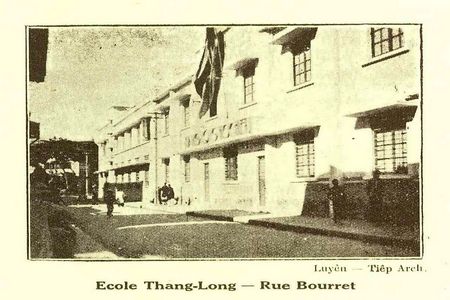
École Thăng Long in Hanoi is frequently referred to as the “Cradle of the Revolution” that led to the First Indochina War1 (1946–1954) between France, which sought to retake control of its former colonial territory, Indochina, and the Việt Minh forces fighting for Vietnamese independence.2 Numerous figures key to the national liberation of Vietnam—founding cabinet members, high-ranking military officials, journalists, writers, cultural workers, and diplomats—share this school as a common academic origin.3
I write this as a descendant of the school’s founder, Phạm Hữu Ninh—my great-great-uncle—who established École Thăng Long in 1920 originally as a primary educational institution.4 A closer reading of oral histories, archival newsprints, and declassified counterintelligence records reveals École Thăng Long as an entry point into a wider ecosystem of resistance through which Vietnamese architects armed the decolonization of Vietnam. In interwar colonial Indochina, several decades after France established the protectorate of Tonkin in 1884, a burgeoning Vietnamese intelligentsia had begun to coalesce in Hanoi. Its members inherited the aspirations and political struggles of earlier reformist generations, many of whom had been exiled or executed for challenging colonial authority.
Despite these repeated suppressions, the optimism of past and future efforts toward progress for the Vietnamese people lingered in their collective imagination. Newly graduated Vietnamese architects and architectural students would spend the pivotal decade leading up to the August Revolution of 1945 experimenting with new approaches that would culminate in their active participation in the Indochina Wars as resistance fighters. Reflecting upon this seminal generation of late colonial and early postcolonial Vietnamese architects offers contemporary architectural practitioners, educators, and students three principal lessons on the importance of schools, the architectural media, and the stakes of architectural education for planetary liberation.
Lesson #1: Uncensored educational spaces must exist for revolution.
Although École Thăng Long had already been operating for nearly fifteen years in the Old Quarter, at 2 and 9 Rue Takou (today 2 and 9 Hàng Cót), its lasting legacy as a base nurturing generations of nationalist revolutionaries was cemented in 1934, when my great-great-uncle Ninh along with seven other co-conspirators created the Association pour le développement d’éseignement libre (Association for the Development of Independent Education)—or ADEL. The founders—a diverse group of civil servants, academics, college students, and architects who all held anticolonial convictions—formed ADEL as part of an effort to grow intellectual power toward an independent Vietnam through the physical and programmatic expansion of École Thăng Long. As the Rue Takou location continued to operate at the primaire and primaire supérieur levels, ADEL initiated plans to offer courses at the baccalauréat level, seeking to educate a demographic of older students. At the same time, the group began intentionally recruiting leftist professors to accommodate the school’s growing student population.5
Operating at all three levels of education required a larger site for École Thăng Long, so ADEL set out to remodel a one-story building at the intersection of Rue Bourret and Boulevard Henri d’Orléans. Although ADEL’s constituents were members of the upper echelons of French Indochina society, their collective efforts to pool funds for such a renovation proved insufficient, even with loans.6 The reconstruction only became economically feasible when ADEL member, architect Nguyễn Cao Luyện, who had recently returned from a yearlong internship at the Paris offices of Auguste Perret and Le Corbusier,7 successfully convinced a local construction contractor to undertake the remodeling on an installment-based repayment agreement.8 The then–twenty-seven-year-old Nguyễn Cao Luyện, joined by his former classmate Hoàng Như Tiếp, subsequently assumed responsibility for the school’s redesign.9 In the process, they cofounded a joint architectural practice, Ánh Sáng / Lumière, the first Indigenous-founded architecture firm in Indochina.10
École Thăng Long reopened in October 1935 at its new location as the first Vietnamese-owned private high school and rapidly gained prominence among the children of Indochinese elites throughout the provinces.11 My grandfather Nguyễn Ngọc Dung attended the school during this period. The Vietnamese French architectural historian Caroline Herbelin characterized the school’s new location as an intersection of the Indigenous bourgeoisie quarters, the merchant class quarters, and the impoverished quarters.12 This centralized equidistance made it physically accessible for students from disparate socioeconomic strata. The school served approximately 280 students, its maximum classroom capacity, in 1935.13 In 1939, directeur Hoàng Minh Giám shared in a letter to the Mairie de Hanoi (Hanoi’s Mayor Office) that École Thăng Long actually provided more than 200 of its deserving students with full and partial tuition assistance during the 1937–1938 academic year so they could receive an education in spite of their poverty.14
For a school founded and designed by the indigènes, the white Art Deco facades, high ceilings, and flat rooftop of École Thăng Long structurally bolstered ADEL’s civic self-assertion that Vietnamese society could define modernity on its own terms. The building’s style notably diverged from the more ornamental Beaux Arts or style indochinois of other Hanoi schools at the time. École Thăng Long’s facades faced southeast and northwest, a favorable orientation that facilitated effective natural ventilation and daylight within the classrooms, further enhanced by horizontal brise-soleil overhangs above the large exterior windows that moderated the building’s solar gain and reduced heat exposure. At the center of the school was a large tree-shaded courtyard that promoted airflow through the classrooms while providing an ideal outdoor environment for study and recreation. École Thăng Long also boasted a laboratory for the instruction of physics, chemistry, and natural sciences in addition to a well-stocked library accessible to students and teachers alike. Committed to ensuring the health of its students, the administration offered free weekly medical examinations on campus.15
Since ADEL’s founding in 1934, the appointment of teachers at École Thăng Long, many of whom had records of expulsion and exile for political dissent, was repeatedly noticed by the sûreté.16 Despite the mandate that all the school’s logistical coordination required official French approval, ADEL nonetheless sought to evade the enforcement of propagandized French educational policy.17 For instance, Tôn Thất Thành, the son of Tôn Thất Bình—one of École Thăng Long’s administrators and teachers—recounted how his father once defended the school’s symbolic decision to mount a large Vietnamese flag above a smaller French flag when questioned by French authorities. In another instance, Thất Bình delivered a speech at a ceremony to commemorate Jeanne d’Arc but instead spoke to his students more about the Trưng sisters (Hai Bà Trưng), Lạc Việt military leaders who in 40 CE led a rebellion against Han Chinese domination and briefly established a female-led independent regime.18
Archival letter exchanges from 1928 to 1936 between the sûreté and French officials reveal the extent to which the French colonial government surveilled the activities of École Thăng Long faculty and students.19 Over time, these reports resulted in the disappearance of several teachers.20 The sûreté also arrested and detained my great-aunt Phạm Thị Bạch Thược, who was not an enrolled student; as a politically active teenage daughter of the school’s first directeur, she was nonetheless considered a person of interest.
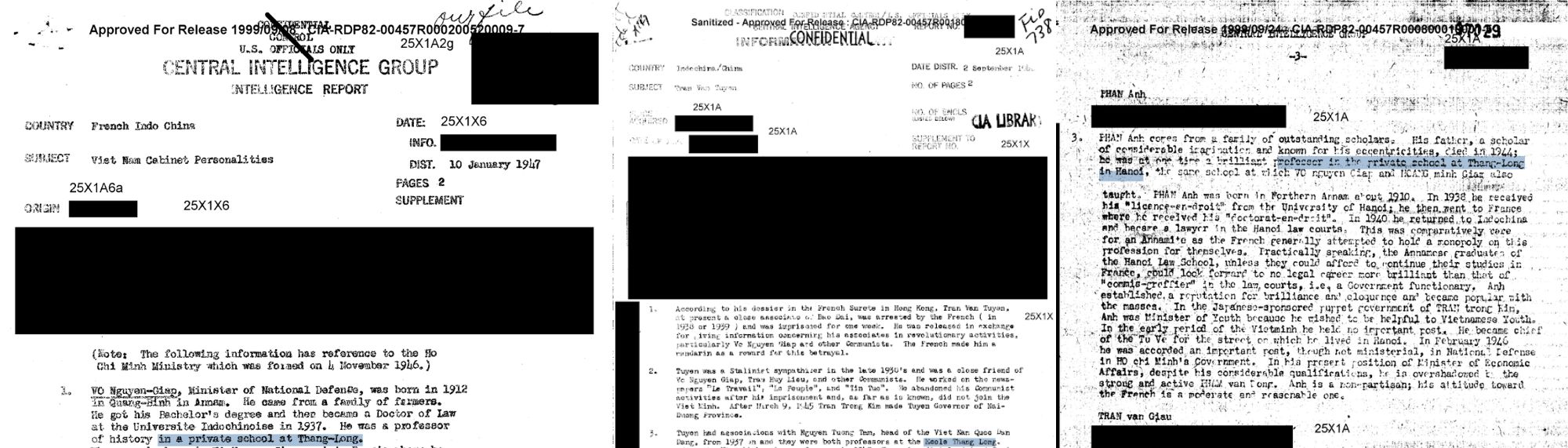
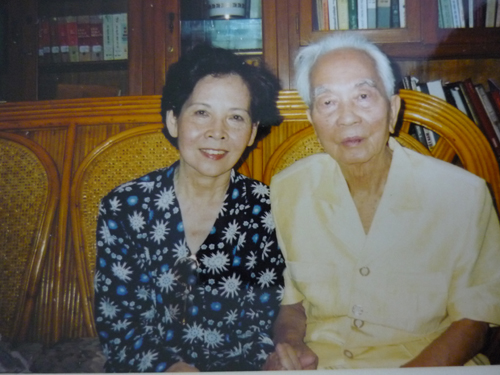
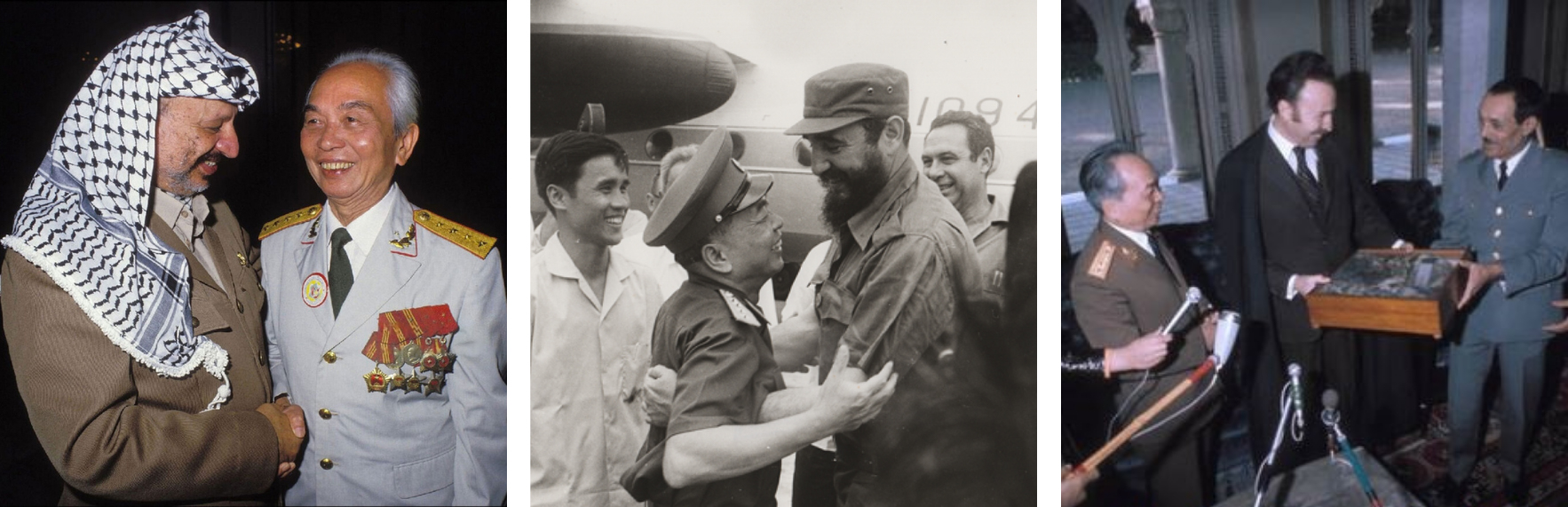
According to declassified Central Intelligence Agency reports, the CIA likewise monitored individuals affiliated with École Thăng Long, with the earliest known entries dating back to 1947. Võ Nguyên Giáp, principal military commander of the Việt Minh, was perhaps the most notorious high-value target of both France and the United States connected to École Thăng Long.21 His guerrilla-conventional warfare strategies guided the Việt Minh to a definitive victory over France at the Battle of Điện Biên Phủ (1954), securing Vietnamese sovereignty and effectively ending the First Indochina War. The martial success of Vietnam’s fight for self-determination—often tactically credited to Giáp—inspired solidarity among prominent revolutionary figures across the world, including Yasser Arafat of the Palestine Liberation Organization, Fidel Castro of the Cuban Revolutionary Armed Forces, and the leaders of Algeria’s National Liberation Front.22 Less widely known, Giáp was a history teacher at my family’s school, who held no prior military experience upon being hired.23
In this way, the architecture of a school can become a site of profound resistance, underscoring how uncensored educational spaces remain foundational to liberation movements. Despite political repression, financial scarcity, and bureaucratic hardships, designers of the built environment must persist in demanding—by any means necessary—the continued creation and preservation of centers for critical learning. The anti-colonial leader Amílcar Cabral argues that education constitutes part of a “whole system of repression” created by the colonizer to culturally alienate portions of the colonized populace through assimilation, thereby producing a subset of Indigenous elites distinct from the broader population.24 Cabral further argues that, for the colonized, liberation requires the reeducation of the people’s own history, values, and social realities.25
École Thăng Long was able to cultivate a generation of radicalized future leaders—across different fronts—precisely because its instructors and administrators built an alternative model of learning rooted in heritage and free speech. Furthermore, the school sustained a steadfast conviction to continue providing its students with a politicized high school education, amid and despite years of state-sanctioned attacks on its academic body. The many children and adults who survived these waves of persecution now have their names written in history books, demonstrating how continued disobedience always holds the possibility to reverberate beyond the imagined limits of spatial and temporal boundaries.
Lesson #2: Architectural media that challenge the status quo will mobilize the masses.
Along with the founding of ADEL and the inauguration of École Thăng Long, Vietnamese architects channeled architectural design into other forms of critical knowledge production, particularly with the curation and dissemination of revolutionary papers via the satirical periodical Phong Hoá. As detailed by Vietnamese American historian Martina Thucnhi Nguyen in On Our Own Strength: The Self-Reliant Literary Group and Cosmopolitan Nationalism in Late Colonial Vietnam, Phong Hoá was one of the most popular weekly digests in all Indochina. That is, until French authorities forced it to cease operations in the summer of 1935, causing a financial setback that ultimately led to the newspaper’s demise in July 1936.26 Originally established in 1932 as Mores (Latin for “manners”) by my great-great-uncle Ninh, that same year, full creative direction was passed on to one of the school’s science teachers, Nguyễn Tường Tam—better known by his pen name Nhất Linh—due to low initial readership.27 Tường Tam assembled an editorial team of politically engaged intellectuals, artists, and designers—some of whom happened to be ADEL members—who came to call themselves Tự Lực văn đoàn / Union Littéraire Autonome, which historians often refer to as the Self-Reliant Literary Group.28 Under fresh leadership, and rebranded as Phong Hoá, the magazine generated progressive nationalist discourse aimed at reforming cultural affairs in media, literature, fashion, and even architecture.29
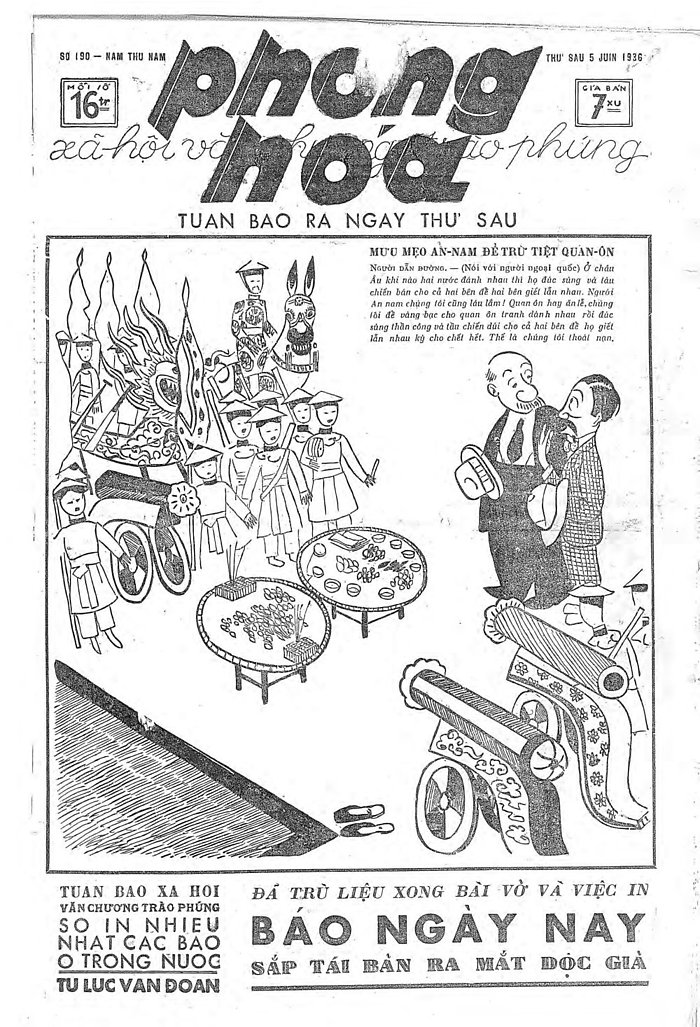
These architectural contributions particularly sought to engage public interest in emerging architectural innovations designed by the Vietnamese graduates of the École supérieure des Beaux-Arts de l’Indochine. As Nguyễn Cao Luyện was redesigning École Thăng Long in 1934, he also became a contributor to Phong Hoá, where he detailed his climate-adaptive residential designs in rural villages. His early published articles focused on his client work, including the blueprints for the public to read.
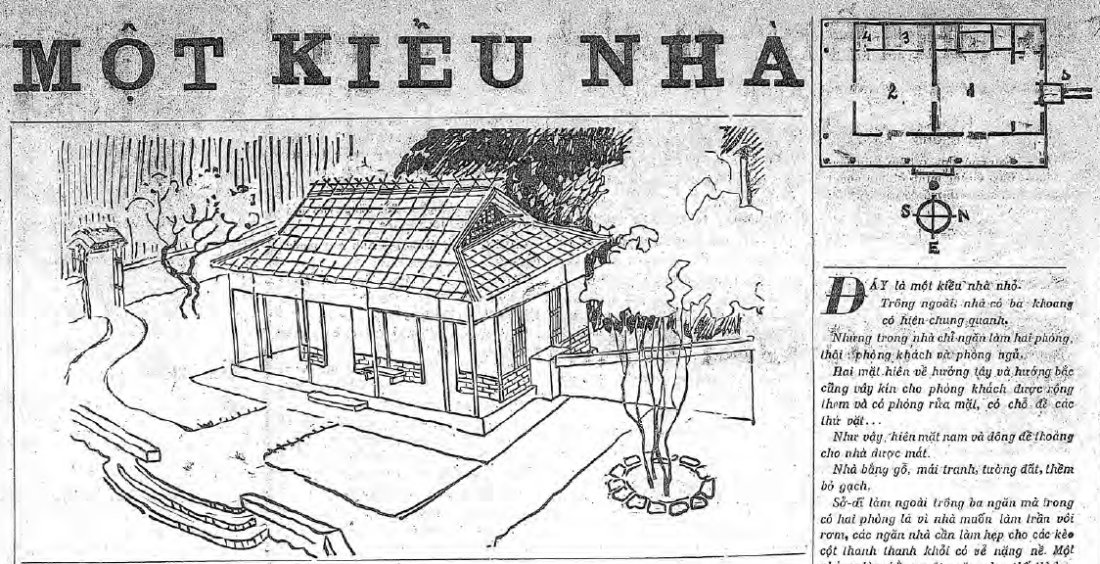
That same year, the École supérieure des Beaux-Arts de l’Indochine exhibited proposals for a building competition designed by the school’s architecture students. The prize for first place went to a scalable, low-cost, passive-cooling-oriented urban housing project in Sinh Từ, a laboring-class neighborhood of Hanoi, designed by fourth-year student Võ Đức Diên. Diên expressed to visiting reviewer and Phong Hoá editor Nhị Linh his willingness to offer his architectural design drawings for free to anyone who wished to build it. In turn, Phong Hoá printed the program description of his student work in its issue 124, aiming to advance architectural knowledge outside the academy, in a move reminiscent of what Luyện did.30 Building on this practice, Luyện’s firm partner Hoàng Như Tiếp soon joined Luyện in theorizing new typologies for constructing cheap and practical rural homes.31 Together, the two coauthored several pieces for Phong Hoá, not in pursuit of advertising their business, but rather to position architecture as a public good that members of lower social strata could benefit from.32
They soon put their theory into practice in 1937 when Tự Lực văn đoàn, guided by the architects Luyện and Tiếp, established an offshoot self-funded collective known as Hội Ánh Sáng,33 or by its official French registration name(s) Ligue Ánh Sáng, Ligue pour l’habitation salubre, or Association de lutte contre les taudis, which translates to the League of Light, the League for Sanitary Housing, or the Association for the Fight Against Slums, respectively.34 The founding executive members of the League were teachers of École Thăng Long who in the beginning hosted weekly meetings on campus after school hours.35
In a 1936 speech, Hoàng Như Tiếp outlined the defining principles underpinning their practice—Ánh Sáng / Lumière—which Hội Ánh Sáng / Ligue pour l’habitation salubre sought to reproduce:36
– The rejection of architecture as an arena that is limited only to superficial aesthetic decoration.
– Architecture should demonstrate a scientific rationale for the arrangement of living quarters.
– The first materials to build with are: natural sunlight, the sky, the trees, the breeze, and clean air.
Hội Ánh Sáng reached its peak between 1937 and 1938. With a membership of thousands of participants, Martina Thucnhi Nguyen describes it as the “largest grassroots philanthropic organization founded by Vietnamese in the colonial era.”37 Although Hội Ánh Sáng held nationwide ambitions for housing reform, during the organization’s four years of activity, it only completed a single built development, a master-planned flood-resilient and fire-mitigative residential commune in Phúc Xá, a small village along the bank of the Red River on the outskirts of Hanoi.38 The architects of Hội Ánh Sáng had designed the settlement in a modular geometric grid that departed from the traditional spatial layout of northern Vietnamese villages. They built the houses primarily using inexpensive materials such as wood, thatch roofing, and bamboo species like Dendrocalamus sinicus and other species in the tribe Bambuseae. Due to the flammability of the plant-based building materials as well as Phúc Xá’s prior history of fires, the houses were spaced apart in a manner that anticipated principles of defensible space, thereby reducing both the risk of structure ignition from wind-borne embers and the potential for fire spread between houses. The finished floor elevation of each residential unit was raised one meter above the original grade, and each house stood on a raised earthen plinth formed by retaining walls and sloped earth embankments that transitioned to the existing ground level. The architects believed that this one-meter elevation would provide sufficient protection against seasonal flooding. 39
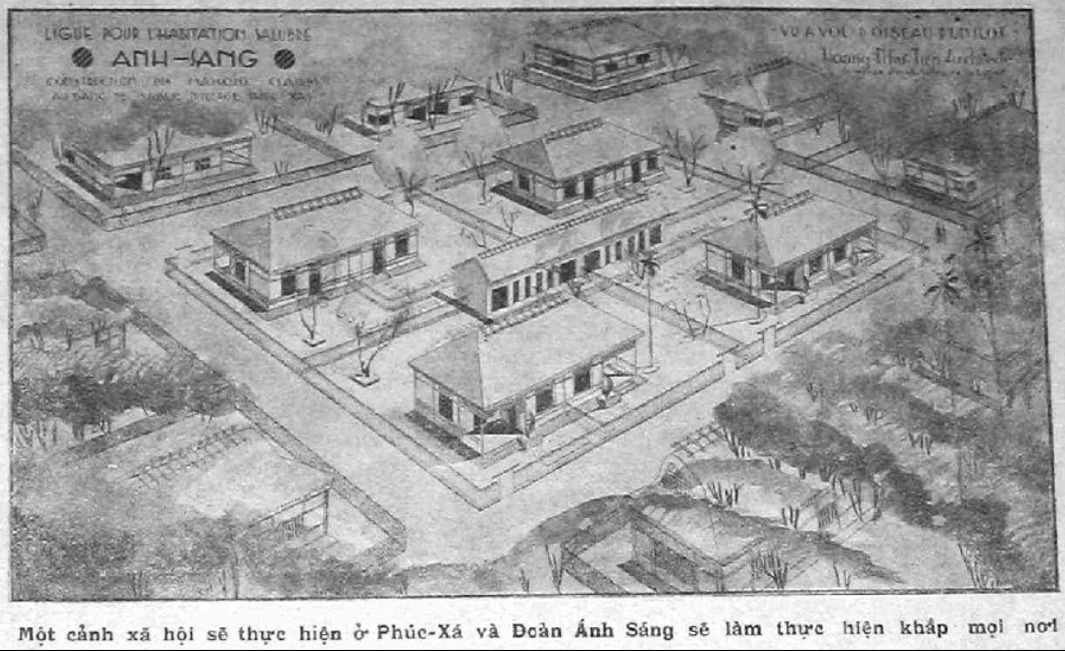
This thirty-four-house settlement comprised thirty-three family dwellings and one communal house that served as both an assembly hall and a mutual-aid medical clinic. The project illustrates both the Vietnamese architects' drive to counter the dilapidated urban planning conditions exacerbated by colonialism and the willingness of the common people to follow their lead by participating in this shared cause. Hội Ánh Sáng, however, soon fell out of public favor due to allegations of financial improprieties, and disbanded in January 1941.40 But despite the short life of Hội Ánh Sáng and Phong Hoá, the actions of its organizers expose the strength of architectural media to mobilize class solidarity. It can be argued, therefore, that architecture—or rather the right to a dignified life as highlighted by these nhà Ánh Sáng (“Light Houses”), proposed by Ánh Sáng / Lumière and Hội Ánh Sáng—became a principal objective of the Democratic Republic of Vietnam’s (DRV) government during and immediately following Hồ Chí Minh’s presidency.
In this period, French-trained architects such as Luyện, Tiếp, and Diên formatively shaped the Vietnamese struggle for cultural identity, setting a prelude to the armed struggle ignited by the onset of the First Indochina War. As articulated by architectural theorists Cruz García and Nathalie Frankowski, “narrative imaginaries of the colonial subject” may “master the oppressor’s language only to twist its grammar into coded rebellion.”41 These Vietnamese architects subverted the French architectural education they were indoctrinated to adhere to, instead pioneering a new path for the discipline, one defined by self-determination.
The episodic readjustments of imperial regimes throughout the course of World War II had left Indochina in a power vacuum by the summer of 1945.42 After the Việt Minh seized control of Japanese-occupied and French-administered cities across Indochina in the August Revolution, Hồ Chí Minh, on September 2, 1945, proclaimed the establishment of the Democratic Republic as a fully sovereign state. The Allied forces subsequently supported France’s military reoccupation of Indochina, ordering Chinese Nationalist troops to northern Vietnam and British forces to the south. In the spring of 1946, Hồ Chí Minh attempted to peacefully negotiate with French authorities to concede and accept the DRV’s independence, to no avail.43 France’s unrelenting determination to reinvade Vietnam directly contested the latter’s claims to autonomy.
Amid the chaos, Vietnamese architects saw a newfound opportunity to establish a professional guild free from the colonial obligations of serving the French administration. That autumn, they began making plans to form Đoàn Kiến trúc sư Việt Nam (the Vietnam Architects Association) in Hanoi. They had delegated tasks among members in fervent preparation until, in November 1946, French troops suddenly bombarded the port city of Hải Phòng, killing thousands of residents and effectively burning the illusion of postcolonial society.44 In response, Hồ Chí Minh issued a nationwide call for resistance: “Whoever has a gun uses a gun. Those who have a sword use the sword, and those who do not have a sword use a pickaxe, a spade, or a club. Everyone must try to fight against the French colonialists to save the country,” insisting that “it is better to sacrifice everything than to lose the country.”45
Full-blown war had erupted and Vietnamese architects unequivocally pivoted from the cultural struggle to the armed struggle that was being asked of the masses. Countless architects immediately relocated to the front lines, some bringing their families along with them.46 Architecture students of the dissolved École supérieure des Beaux-Arts de l’Indochine also made their way to the battlefields, completing their architectural studies in the Việt Bắc Interzone, the Việt Minh’s northern rural military bases. In official testimony from Đại hội KTS lần thứ II (the Second Congress of Architects) in 1957, one architect reflected on this wartime movement:47
Nguyện Cao Luyện and Hoàng Như Tiếp, the designers of École Thăng Long and the founding principal architects of Ánh Sáng / Lumière, led the recruitment and assembly of architectural divisions for Việt Bắc Interzone 1, 3, 4, and 10.48 In addition to serving as Việt Minh soldiers, these architects stationed throughout the Interzone designed and built bunkers, assembly halls, and radio stations using readily available natural materials such as bamboo and reeds, while sparingly utilizing earthen brick and stone.49 In 1948, as architecture was mobilized for resistance, the DRV’s Bộ Giao thông Công chính (Ministry of Transport and Public Works) called upon the nation’s architects to finish the work of establishing Đoàn Kiến trúc sư Việt Nam (the Vietnam Architects Association).50
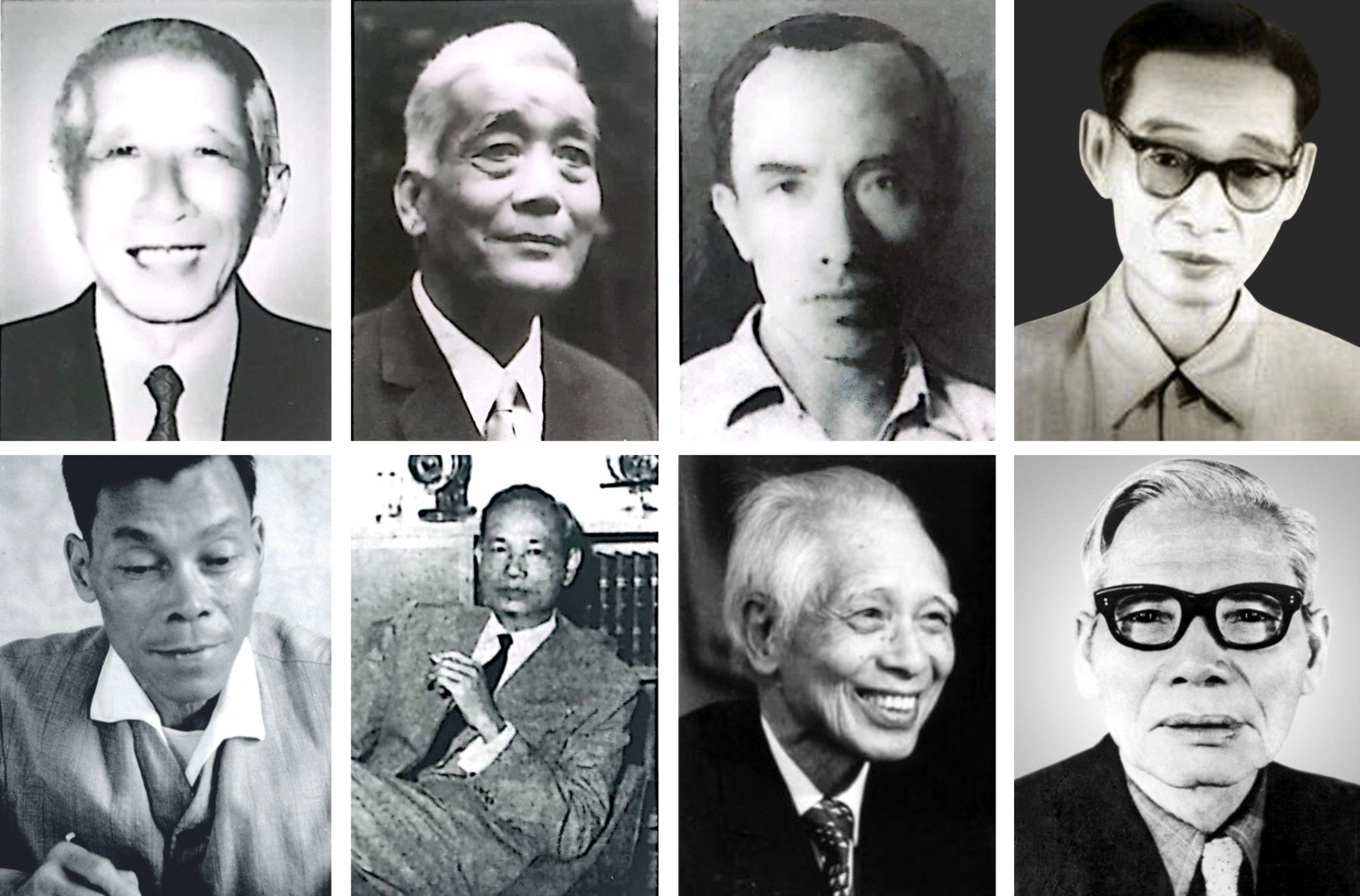
While separated across vast stretches of active conflict zones, eight leading architects—Nguyễn Cao Luyện, Hoàng Như Tiếp, Tạ Mỹ Duật, Võ Đức Diên, Phạm Quang Bình, Trần Hữu Tiềm, Nguyễn Ngọc Chân, and Đoàn Văn Minh—arranged to convene at the village of Thản Sơn in mid-April 1948. Spread throughout Việt Bắc, the majority walked by foot to the meeting place, the architects from Interzone 3 and 4 undertaking the most arduous journey of all, traversing hundreds of kilometers through enemy territory to reach their destination.51 Đại hội KTS lần thứ I (the First Congress of Architects) took place on April 24, and was attended by delegates of the Ministry of Transport and Public Works as well as the eight architects. The meeting opened with the reading of a letter written by Hồ Chí Minh addressed to the Congress of Architects. The first sentence read:
He tasked the architects in attendance to consider practical plans for ensuring that architecture and urban planning would meet the wartime and post-liberation needs of the people, with special attention paid to providing affordable and sanitary rural housing.52 Three days later, Đoàn Kiến trúc sư Việt Nam (the Vietnam Architects Association) was founded on these principles, nearly two years after France’s escalations of violence interrupted the group’s earlier plans in Hanoi.53 Each architect returned to his respective military station entrusted with carrying forward the mission of the Vietnam Architects Association.54
Three months later, in July, a handful of architects, who themselves had been informed by the First Congress of Architects, exhibited design proposals at the multimedia Đại hội văn nghệ kháng chiến (Resistance Arts and Literature Congress). More than eighty artists and writers gathered in Phú Thọ Province to celebrate their artistic visions for postcolonial society. The architects shared drawings of commune health stations and rural housing for the plains, midlands, and mountainous regions on carved wood, block-printing multiple copies for distribution to localities.55 The Resistance Arts and Literature Congress slogan, “Sáng tác để kháng chiến, tổ chức để sáng tác” (“Compose for the resistance, organize for composition”), hung across the exhibition rooms.56
Đoàn Kiến trúc sư Việt Nam (the Vietnam Architects Association) is the predecessor of today’s Hội Kiến trúc sư Việt Nam (the Vietnam Association of Architects), a professional society that traces its origins to the Resistance War and has been recognized by the International Union of Architects (IUA) since 1958.57 Tự Lực văn đoàn, Hội Ánh Sáng, and Đoàn Kiến trúc sư Việt Nam teach today’s artists and designers the liberation found in forming their own self-reliant organizations. The solidary success these groups were able to achieve in their lifetime was only possible because they forwent reliance on the same systems created by their oppressors. These Vietnamese organizations for knowledge formation, material transformation, and professional practice generated their own unwavering strength, critical to fueling the revolution.
Lesson #3: Architecture matters because it is a responsibility to society.
In June 1950, as the First Indochina War raged on, the fledgling Vietnamese government’s Ministry of Transport and Public Works formalized Nha Kiến trúc (the Department of Architecture). The work that had initially been assigned to Đoàn Kiến trúc sư Việt Nam (the Vietnam Architects Association) had to be scaled up to the level of the central government—no longer relegated to a professional guild—to meet the latest demands of war. Operating out of Đại Từ district in Thái Nguyên Province, almost fifty workers were brought onto the new department, including ten architects, who were directed by architects Nguyễn Cao Luyện and Nguyễn Văn Ninh. Even as they dug bomb shelters and worked in agriculture to survive, staff members designed projects for the war effort and the country’s postcolonial national architecture.58
While the DRV would finally receive international recognition of its independence in 1954 through the Geneva Accords, the country was provisionally partitioned at the 17th parallel into two states: the DRV in the north and US-backed State of Vietnam in the south. After the United States and State of Vietnam refused to uphold the planned election for reunification, the north and south were left indefinitely divided.59 The DRV consolidated its authority in the northern region, and under a nascent socialist government, established Bộ Kiến trúc (the Ministry of Architecture) as a distinct branch of government in 1958. Its formation prompted the question: What role can architecture assume within a state that categorically invests in it as a public necessity?
In The Wretched of the Earth, Frantz Fanon explored decolonization as the substitution of one colonial society with an alternative society: “The substitution is unconditional, absolute, total, and seamless. We could go on to portray the rise of a new nation, the establishment of a new state, its diplomatic relations and its economic and political orientation. But instead we have decided to describe the kind of tabula rasa which from the outset defines any decolonization… proof of success lies in a social fabric that has been changed inside out.”60 Fanon insisted that decolonization does not simply entail a return to a precolonial past; rather, decolonization required the development of new state apparatuses and new ways of being.61 If architecture is a weapon traditionally employed by colonizers to exert their influence,62 then the DRV’s establishment of a Ministry of Architecture can be understood as an institutional attempt to instrumentalize that substitution, in line with Fanon’s theorization.
Between 1958 and 1973, the Ministry of Architecture invested heavily in building national institutions for higher education, including the Electricity and Water Resources Academy, the Hanoi Architectural University,63 and a myriad of nationalized vocational schools.64 Meanwhile, the Ministry of Architecture restructured how the next generation should learn architecture. In the year immediately following the Geneva Accords, the DRV government sent a cohort of Vietnamese university students abroad to study social housing and urban design in various Eastern Bloc nations.65 Domestically, the Ministry of Architecture instituted Lớp đào tạo KTS (the Architects Training Class) in 1961.66
In 1964, a decade post-independence, the directors of the Architects Training Class combined the expertise of older architects who were educated under French colonial rule with younger architectural educators who had recently trained in socialist countries to produce the government-funded KT64 Class of Architects. The twenty-five-student cohort was educated through an exceptional six-year architectural training pilot program, the only one of its kind. Smaller class sizes were prioritized for more one-on-one interactions. All KT64 students were provided with dormitories and ample art supplies.67 Instruction was provided by the Faculty of Architecture and housed within the National University of Civil Engineering for almost a full year, until incorrect intelligence assessments of an incident in the Gulf of Tonkin led the US military to escalate interventions in Vietnam.68 American bombing raids on Hanoi ensued.69
The KT64 students and faculty, abruptly forced to evacuate from the city to rural Phú Thọ Province, proceeded with learning. The pedagogy adapted to the local conditions the students and teachers had to live in. Classes were taught in basements, landscape painting and sculpture making were incorporated so the students could consider their relationship with the countryside, and many students had to build their own thatch huts for temporary shelter.70 Along with the teachers, they participated in planting crops and harvesting locally grown rice for subsistence.71 Eventually, after two years, they were able to safely return to their university. Upon graduating in 1970, they were all assigned to work at various government agencies based on their individual preferences.72
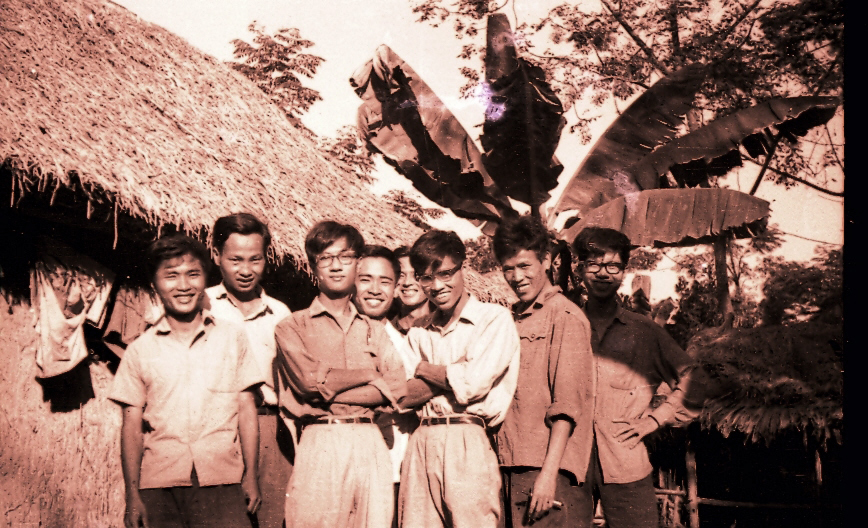
As Hồ Chí Minh alluded in his 1948 letter to Vietnamese architects—architecture has a responsibility to society.73 The subsidization of architectural education, as attempted with the KT64 cohort, underscores the economic responsibility that institutions of power such as governments must bear to ensure that future generations benefit from architecture. I offer this history to propose radical hope for a future that, in many ways, depends on how spatial practitioners choose to participate in it.
The intertwined relationship between architecture and political decolonization in a former colony like Vietnam reveals the necessity for architectural designers to establish practices and associations grounded in values beyond mere resource extraction and profit accumulation. As demonstrated by the aforementioned Vietnamese architects of the twentieth century, there are many ways to fight: as an intermediary, a designer, an academic, a political organizer, a student, an educator, a dissident, and beyond. Architecture as resistance is neither fantastical nor obsolete. École Thăng Long became nationalized in 1954 and continues to operate today as an elementary school. The building continues as my own living ancestor.74
Revolution and interconnected struggle should feel more concrete, made ever more possible, by the willingness to recognize today as a reflection of the past. Even amid decades of war, nearly all the people I named lived long and happy lives, steadfast in their convictions and unwavering friendships. These Vietnamese architects’ aspirations to push for just housing, a climate-responsive urban fabric, and an emancipated society is the same fight that today’s generations continue. We remain part of an ongoing continuum shaped by struggle and oriented toward refusing despair.
như cây có cội,
như sông có nguồn.
the way trees have roots,
the way rivers have sources.
-
Bùi Hoàng Tám, “Kỳ II: Trường Tư Thục Thăng Long - Cái Nôi Của Cách Mạng,” Dân Trí, September 5, 2007, link. ↩
-
Pham Duc Thuan and Tran Minh Thuan, “The First Indochina War (1946–1954) and the Geneva Agreement (1954),” Cogent Arts & Humanities 11, no. 1 (2024), link. ↩
-
Martina Thucnhi Nguyen, On Our Own Strength: The Self-Reliant Literary Group and Cosmopolitan Nationalism in Late Colonial Vietnam (Honolulu: University of Hawai‘i Press, 2021), 162, 195, link. ↩
-
Bùi Hệ, “Trường Tiểu học Thăng Long cuối những năm 30 của thế kỷ trước,” Trần Thị Mai Hương – Giám đốc Trung tâm Lưu Trữ Quốc Gia I, March 5, 2017, Hanoi, Vietnam. Trung tâm Lưu trữ Quốc Gia I, link. ↩
-
Ban Liên Lạc Học Sinh Trường THTT Thăng Long, Trường Trung Học Tư Thục Thăng Long (1935–1945) (Hà Nội: Nhà Xuất Bản Giáo Dục, 2003). ↩
-
Bùi Hoàng Tám, “Kỳ II: Trường Tư Thục Thăng Long.” ↩
-
Ulrike von Hirschhausen, “International Architecture as a Tool of National Emancipation: Nguyen Cao Luyen in French Colonial Hanoi, 1920–1940,” Hungarian Historical Review 7, no. 2 (2018): 331–47, link. ↩
-
Bùi Hoàng Tám, “Kỳ II: Trường Tư Thục Thăng Long.” ↩
-
Ngô Vương Anh, “Người vẽ Những ‘Ngôi Nhà Ánh Sáng,’” Báo Thanh Niên, October 13, 2013, link. ↩
-
Hirschhausen, “International Architecture as a Tool of National Emancipation,” 340–342. ↩
-
Mairie de Hanoi, “Demandes d’autorisation d’ouverture et de fonctionnement d’une école privée Thang Long.” ↩
-
Caroline Herbelin, Architectures du Vietnam colonial: Repenser le métissage (Paris: Comité des travaux historiques et scientifiques [CTHS] and Institut national d’histoire de l’art [INHA], 2016), 173–235. ↩
-
Mairie de Hanoi, “Demandes d’autorisation d’ouverture et de fonctionnement d’une école privée Thang Long.” ↩
-
Mairie de Hanoi, “Fonctionnement de l’École ‘Thăng Long’ à la rue Bourret (Hanoi), dirigée par Hoàng Minh Giám,” 1936–1945, hồ sơ 5354-01, Fonds de la Mairie de Hanoi (Tòa Đốc lý Hà Nội), Trung tâm Lưu trữ quốc gia I, Hà Nội. ↩
-
Mairie de Hanoi, “Demandes d’autorisation d’ouverture et de fonctionnement d’une école privée Thang Long.” ↩
-
Mairie de Hanoi, “Demandes d’autorisation de changement des lieux d’installation de son école privée dénommé ‘Thăng Long’ formulées par Phạm Hữu Ninh,” 1928–1936, hồ sơ 5247, Fonds de la Mairie de Hanoi (Tòa Đốc lý Hà Nội), Trung tâm Lưu trữ quốc gia I, Hà Nội. ↩
-
Bùi Hoàng Tám, “Kỳ II: Trường Tư Thục Thăng Long.” ↩
-
Tôn Thất Thành, “THẦY TÔN THẤT BÌNH… một ngôi sao băng,” PhamTon (blog), August 9, 2023, link. ↩
-
Mairie de Hanoi, “Demandes d’autorisation de changement des lieux d’installation de son école privée dénommé ‘Thăng Long’ formulées par Phạm Hữu Ninh.” ↩
-
Bùi Hoàng Tám, “Kỳ II: Trường Tư Thục Thăng Long.” ↩
-
Nguyen, On Our Own Strength, 162. ↩
-
Currey, Victory at Any Cost, 6. ↩
-
Amílcar Cabral, “National Liberation and Culture,” Transition, no. 45 (1974): 12–17, link. ↩
-
Cabral, “National Liberation and Culture.” ↩
-
Nguyen, On Our Own Strength, 31. Ngày Nay, the even shorter-lived, succeeding sister satirical newsprint to Phong Hoá, is another stronghold for engaging the public and architecture. ↩
-
Nguyen, On Our Own Strength, 4, 21. ↩
-
Nguyen, On Our Own Strength, 21. ↩
-
Nguyen, On Our Own Strength, 1–4. ↩
-
Phong Hoá, no. 124 (November 16, 1934). ↩
-
Đoàn Ánh Dương, Phùng Kiên, Nguyễn Mạnh Tiến, Mai Anh Tuấn, Martina Thucnhi Nguyễn, Phong hoá thời hiện đại: Tự Lực Văn Đoàn trong tình thế thuộc địa ở Việt Nam đầu thế kỷ 20 (Hà Nội: Nhà xuất bản Hội Nhà văn, 2020). ↩
-
Đoàn Ánh Dương et al., Phong hoá thời hiện đại, 242–243. ↩
-
Nguyen, On Our Own Strength, 5, 199. ↩
-
Herbelin, Architectures du Vietnam colonial, 124. ↩
-
Mairie de Hanoi, “Ligue pour l'habitation salubre,” 1937–1941, hồ sơ 2858, lettre du Président de la Ligue Ánh Sáng à Monsieur le Résident-Maire de Hanoi, 25 août 1938, p. 62, Trung tâm Lưu trữ quốc gia I, Hà Nội. ↩
-
Nguyen, On Our Own Strength, 5, 198–199. ↩
-
Nguyen, On Our Own Strength, 5–6. ↩
-
Nguyen, On Our Own Strength, 199. ↩
-
Nguyễn Mạnh Trí, “GIÁ TRỊ TRUYỀN THỐNG VÀ HIỆN ĐẠI CỦA KIẾN TRÚC NHÀ ÁNH SÁNG,” NHÓM CHUYÊN MÔN LÝ THUYẾT VÀ LỊCH SỬ KIẾN TRÚC, November 19, 2025, link. ↩
-
Nguyen, On Our Own Strength, 199–203. ↩
-
Nathalie Frankowski and Cruz Garcia, “A Manifesto for a Post-Colonial Narrative Architecture,” Journal of Architecture 30, no. 3 (2025): 481–495, link. ↩
-
William Stewart Logan, Hanoi: Biography of a City (Seattle: University of Washington Press, 2000), 118–119. ↩
-
Logan, Hanoi, 130–134. ↩
-
Đoàn Đức Thành, “Nên Chăng 27/4: Ngày Kiến Trúc Việt Nam,” Tạp Chí Kiến Trúc, April 2007, link. ↩
-
Trang Do and Huy Ngo Quang, “Patriotism: The Philosophical Foundation of the Vietnamese People and Its Manifestations in the Rural Villages,” Journal of the International Society for the Study of Vernacular Settlements 10 (2023): 119–133. ↩
-
Đặng Thái Hoàng, “Gương Mặt KTS Việt Nam – KTS Võ Đức Diên,” August 16, 2021, link. ↩
-
Đoàn Đức Thành, “Nên Chăng 27/4.” ↩
-
Ngô Vương Anh, “Người vẽ những ‘ngôi nhà ánh sáng.’” ↩
-
Viện Kiến trúc, “Thế Hệ Kiến Trúc Sư Việt Nam Đầu Tiên,” April 22, 2024, link. ↩
-
Tạ Mỹ Duật, “Đại Hội Kiến Trúc Sư và Văn Nghệ Toàn Quốc Năm 1948,” April 27, 2024, link. ↩
-
Đoàn Đức Thành, “Nên Chăng 27/4.” ↩
-
Kiến Việt, “Hội KTS Việt Nam qua Các Kỳ Đại Hội,” April 27, 2021, link. ↩
-
Đoàn Đức Thành, “Nên Chăng 27/4.” ↩
-
Tạ Mỹ Duật, “Đại Hội Kiến Trúc Sư và Văn Nghệ Toàn Quốc Năm 1948.” ↩
-
Đoàn Đức Thành, “65 năm nhìn lại – Hội KTS Việt Nam, Với những công trình dấu ấn qua năm tháng (P1).” Chuyên Mục. Tạp chí Kiến trúc, April 23, 2013, link. ↩
-
Tạ Mỹ Duật, “Đại Hội Kiến Trúc Sư và Văn Nghệ Toàn Quốc Năm 1948.” ↩
-
Viện Kiến trúc, “Thế Hệ Kiến Trúc Sư Việt Nam Đầu Tiên.” ↩
-
Đoàn Đức Thành, “65 năm nhìn lại – Hội KTS Việt Nam.” ↩
-
W. J. Duiker, J. Buttinger, M. E. Osborne, and W. S. Turley, “History of Vietnam,” Encyclopedia Britannica, April 24, 2025, link. ↩
-
Frantz Fanon, The Wretched of the Earth, trans. Richard Philcox (New York: Grove Press, 2004), 1. ↩
-
Frantz Fanon, Toward the African Revolution, trans. Haakon Chevalier (New York: Grove Press, 1967). ↩
-
Fauziya Isa, Hamsa Al-Aggad, Lujain Al-Quthami, and Nouf Wazna, “The Architecture of Colonialism,” Civil Engineering and Architecture 10, no. 3A (2022): 118–125, link. ↩
-
Đoàn Đức Thành, “65 năm nhìn lại – Hội KTS Việt Nam.” ↩
-
Đào Mạnh Đức, “Lịch Sử Phát Triển Trường Nghề và Trung Cấp Việt Nam,” Tạp Chí Công Thương, May 30, 2023, link. ↩
-
Christina Schwenkel, “Eco-Socialism and Green City Making in Postwar Vietnam,” chap. 2 in Places of Nature in Ecologies of Urbanism, ed. Anne Rademacher and K. Sivaramakrishnan (Hong Kong: Hong Kong University Press, 2017), link. ↩
-
Đoàn Đức Thành, “65 năm nhìn lại – Hội KTS Việt Nam.” ↩
-
Trịnh Hồng Đoàn, “50 năm lớp Kiến trúc sư khóa KT64,” Tạp chí Kiến trúc - Hội Kiến trúc sư Việt Nam, Tạp chí Kiến trúc, December 11, 2014, link. ↩
-
Nhã Anh, “Những ký ức khó quên của thế hệ kiến trúc sư gạo cội,” Ngày Nay, November 14, 2024, link. ↩
-
P. Bauer, “Gulf of Tonkin Incident,” Encyclopedia Britannica, January 19, 2026, link. ↩
-
Trịnh Hồng Đoàn, “50 năm lớp Kiến trúc sư khóa KT64.” ↩
-
Nhã Anh, “Những ký ức khó quên của thế hệ kiến trúc sư gạo cội.” ↩
-
Trịnh Hồng Đoàn, “50 năm lớp Kiến trúc sư khóa KT64.” ↩
-
Trịnh Hồng Đoàn, “50 năm lớp Kiến trúc sư khóa KT64.” ↩
-
Kiến Việt, “Hội KTS Việt Nam qua Các Kỳ Đại Hội.” ↩
-
Nghiêm Huê, “Trường Tiểu học ‘lão làng’ nhất Thủ đô kỷ niệm 90 năm thành lập,” Giáo Dục. Báo điện tử Tiền Phong, November 20, 2019, link. ↩
Nina Tiêu is a researcher and designer. They are currently a junior researcher at the Hanoi-based architectural practice Hanoi Adhoc / Adhoc Practice, a third-year Master of Landscape Architecture candidate at the University of California, Berkeley, and a 2026–27 mentee in the Society of Architectural Historians Mentorship Program.