
I want to know more about the people who took my land, who are they? Why did they dig and scrape the seven roads, how did they build their landscape on our ruins? Why did they build new roads different from ours? How did they select the location of the new kibbutz? What are the first installations they made?
—Salman Abu Sitta, “Return to Al-ma’in”1
It was midday, in July 2015, when I wandered through Lydda, collecting carob pods. An acquaintance at the time—an Israeli self-professed “peace activist”2—was quick to recite what felt like a practiced script: “This is a very, very tough town. The poverty. Immense! Lod is a ghetto.3 Dangerous. But… community initiatives are working to make things better.” Loaded in this statement are the linguistic gymnastics of purportedly well-meaning liberals and zionists-posturing-as-liberals, whose rhetoric of sustainability, authenticity, safety, and “progress” obscures generational violence against the land of Palestine and its people. His statement aggregates systemic inequality as policy, materiality, and propaganda—at sites so often omitted in conceptions of the “occupied territories.”
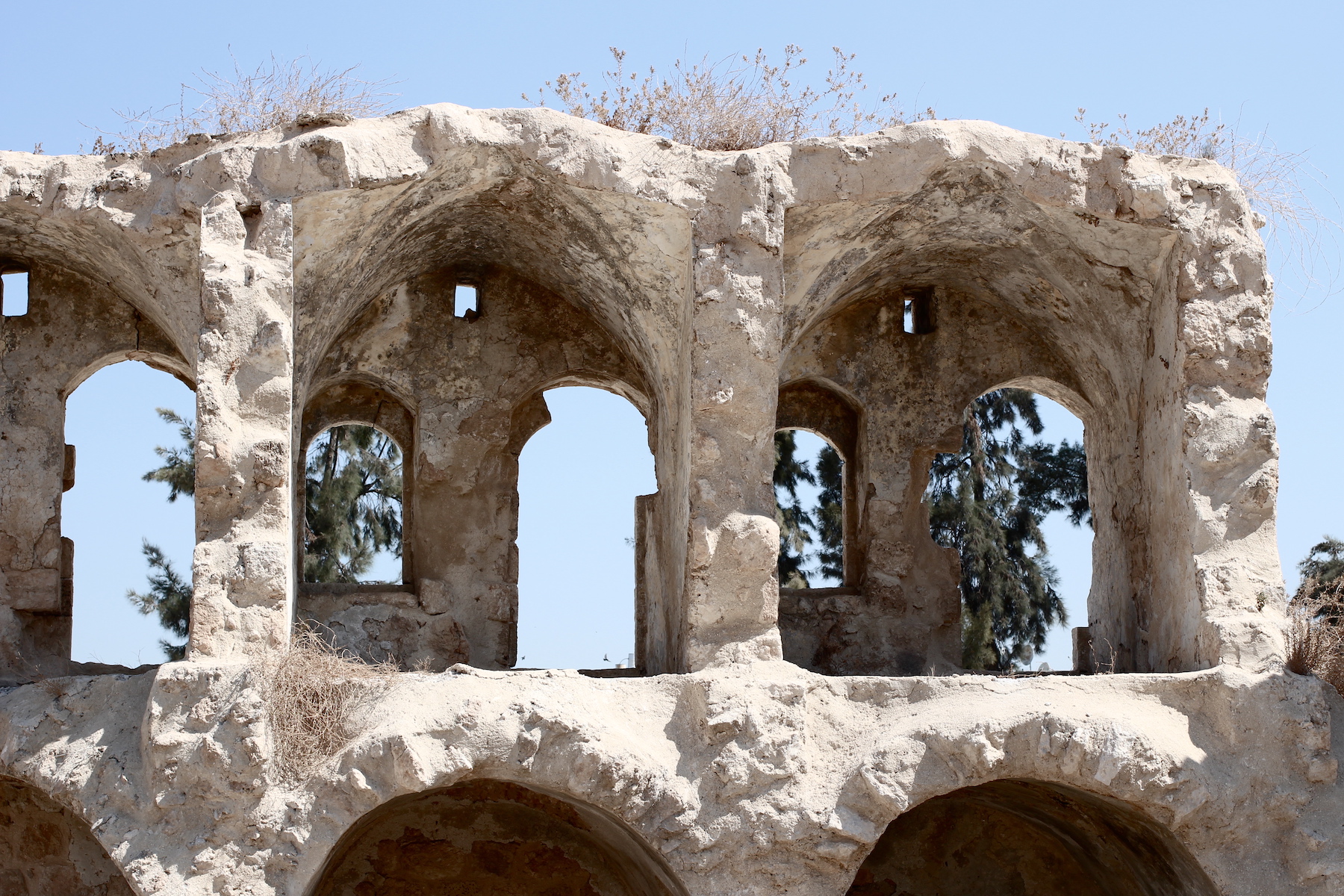
More than a decade later, this vignette remains a microcosm of zionist revisionist history4—one that ignores and, more often, altogether negates Palestinian history. Development is leveraged to aestheticize the brutish reinscription of Palestinian space attendant to the project of ethnic cleansing: new boutique hotels, theaters, sports complexes, and school campuses designed to “make things better” for foreign and Israeli investment—all built atop the ruins of Palestinian neighborhoods. Contemporary “cultural initiatives,” municipal or NGO-led provisions, and trendy architectural repackaging of discriminatory planning mobilize a “sanitation” of space, far more insidious, well funded, and directed than a blanket “-washing” can contain. The architecture firms and design groups responsible for these initiatives both stylize and systemize zionist imperatives.
To put it another way, seemingly innocuous ideals of “social change,” aims of “redevelopment,” and “progressive” architecture projects here are viciously entrenching zionist efforts to rid Palestine of its Indigenous communities and their connections to their land. In Lydda, specifically, the “work” refers to the efforts of vampiric municipal leaders, real estate speculators, and the Jewish Agency absorption center to redevelop the city’s racialized, deeply disenfranchised pockets—areas not considered Jewish enough, nor sufficiently Ashkenazi by zionist ambitions, for a totalizing ethnic and cultural cleansing of the region.5 The Jewish Agency, in tandem with the nonprofit Nefesh B’Nefesh,6 spearhead broader “Judaization” projects across the settler state, to minimize or altogether remove the financial, professional, logistical, and social obstacles that potential settlers (olim) might encounter. Absorption centers “offer a ‘soft landing’ and transitional housing for new immigrant families and adults at the beginning of their acculturation process in Israel.”7
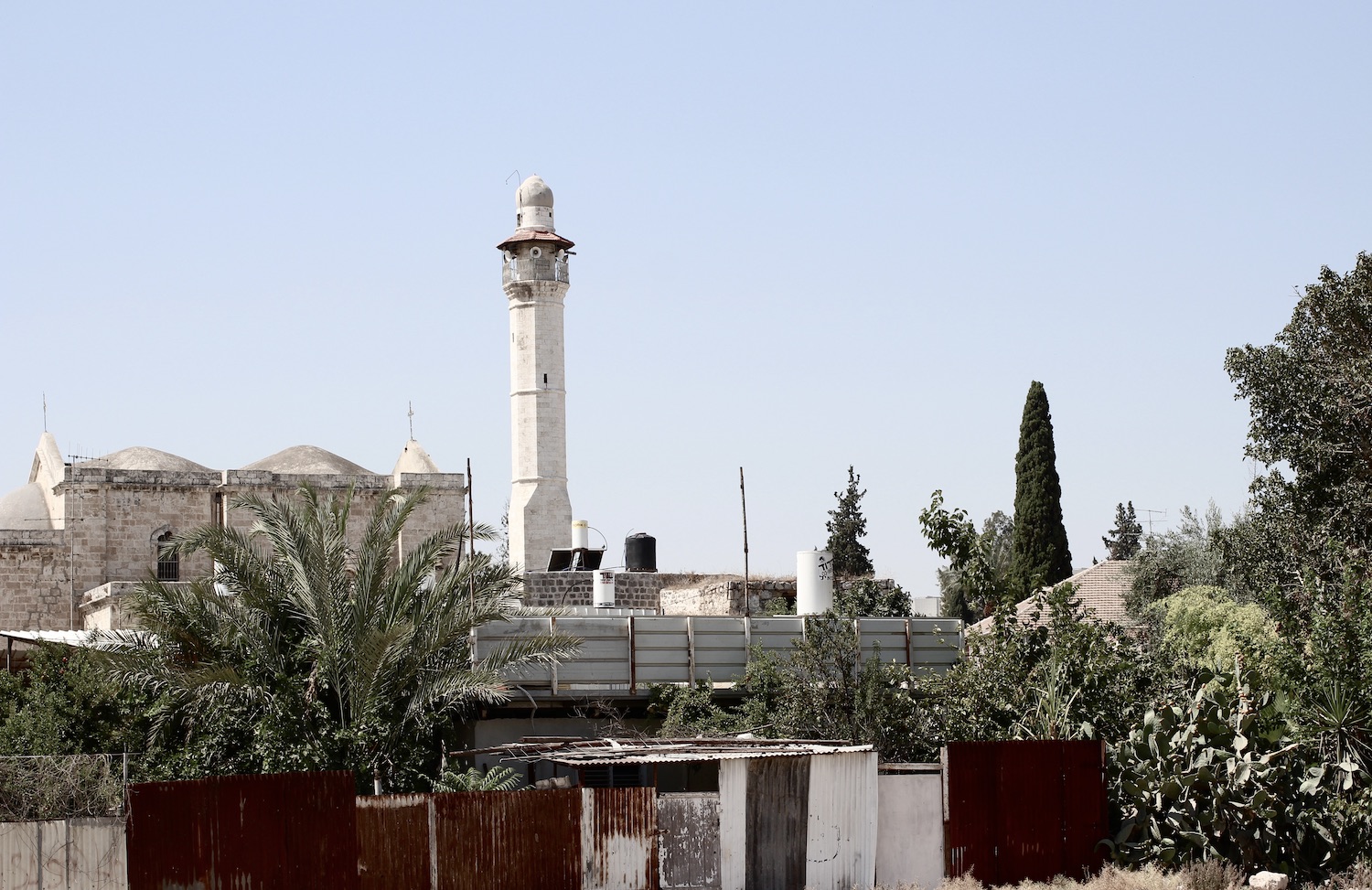
Despite the heat, my guide continued on about the waves of settlement, or aliyah,8 to Lydda in the 1980s, when thousands of settlers from the Soviet Union contributed to the “diversity” of this “mixed-city” (meaning residents are exempted from the typical requirements for obtaining Israeli citizenship); and how the city’s dereliction—as if a localized problem—continues to fuel racial tensions. Omitted, of course, from this retelling is the detailed history of Lydda and its capture, the Palestinian labor camps whose detainees rebuilt the city,9 and its demographic engineering that bring us to today’s pogroms—the mob lynchings of Palestinians and asylum-seeking Eritreans committed by Israelis in recent years, a continuation of the Nakba.10 Reportage on the town works to expedite Lyddawi dispossession and displacement,11 while segregation policies are sharpened and borders are intensified against those who resist removal:
Authorities justify more recent schemes with claims of endemic crime, purported to emanate disproportionately from the city’s “unruly” Arab neighbourhoods. In reality, over half of crimes reported relate to building infractions from Palestinians forced to bypass local authorities’ routine denial of planning permission to build new homes. As for other forms of criminality, the role of state-sponsored policies of immiseration in fostering conditions of lawlessness is public knowledge. Unsurprisingly, these efforts intensify in the aftermath of prolonged contestation: following the First Intifada, security forces used Lydd as a dumping ground for individuals from the West Bank and Gaza considered threatening, forced to move there without documentation or work permits. After the Second, Lydd began to “flourish” as a centre for Israel’s drug trade.12
The perception of criminality and crime across Lydda serves to legitimize urban processes of renewal and functions as a form of revanchism—one arm of the zionist settler-colonial hydra.13 Extensive analysis by Haim Yacobi elucidates the deterministic ways Israeli public discourse ties the “dark ghetto”14 to social maladies that could be healed if physical conditions improve; situated in the longer arc of ongoing Nakba and decades of Palestinian erasure, planning paradigms continue to transform the city tangibly and symbolically, ensuring complete ethnic control.
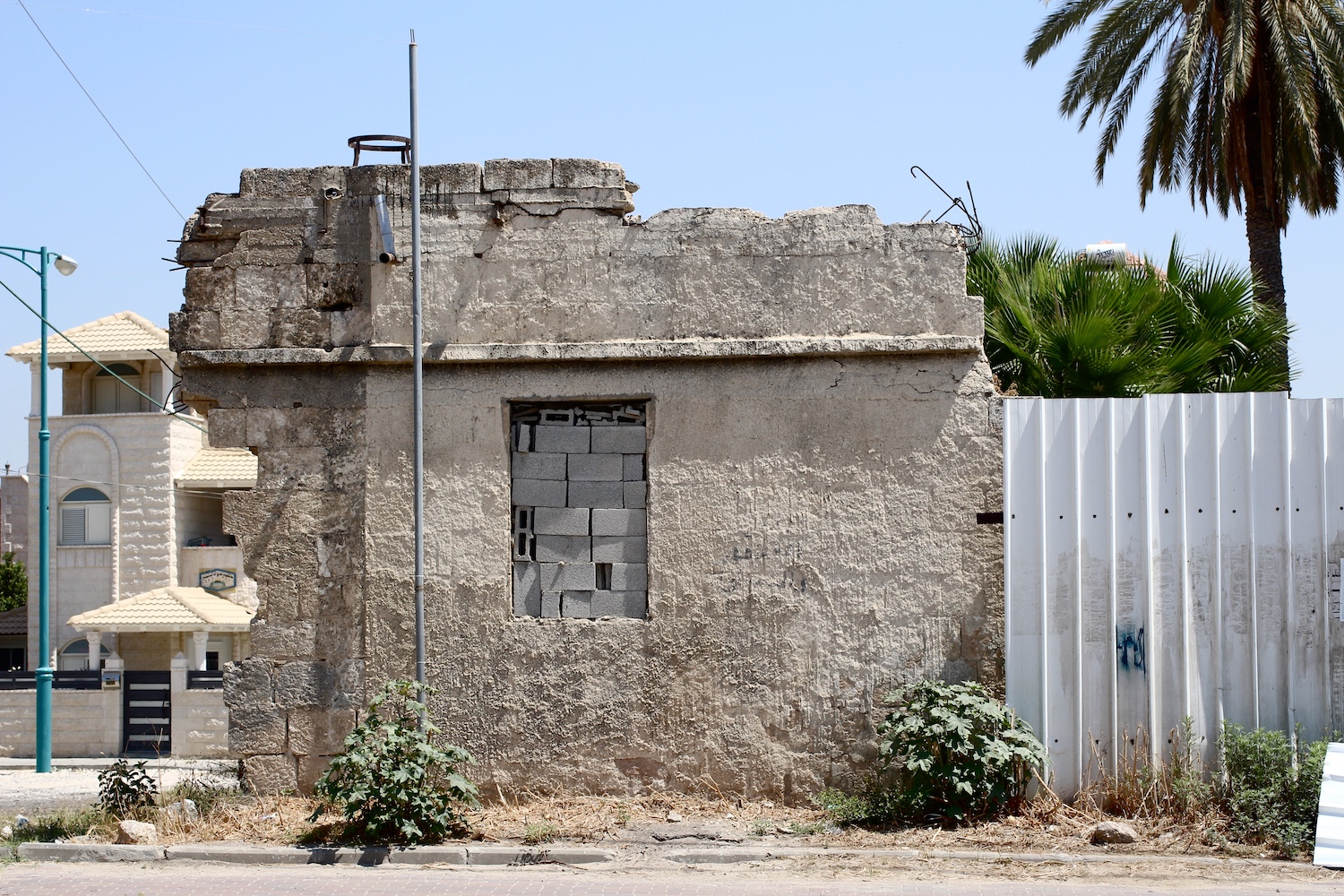
Lydda’s present-day abjection must be connected to the systematic expulsion and massacre of its Palestinian inhabitants during the Nakba.15 The Lydda massacre in July 1948—which took place in two stages—was one of the largest acts of ethnic cleansing perpetrated by Israel.16 And yet the horrors are seldom studied or discussed, and so we must give space to resister Spiro Munayyer’s account of “[the] cataclysmic four days of Lydda’s conquest by the Israeli army (10–14 July, 1948) during which 49,000 of Lydda’s 50,000 inhabitants (‘swollen’ with refugees) were forcefully expelled.”17 He recalled:
I found my way home [the morning of July 13], passing bodies everywhere, in the middle of the streets and along the sidewalks, including bodies of acquaintances. When I reached the beginning of our street, my knees shaking with fear, I saw my family leaving our home with some light belongings. My father, God rest his soul, was carrying some water, saying that was what we needed the most. They told me that three Israeli soldiers had forced their way into our house and ordered everyone to leave at once, warning that anyone still there when they returned in fifteen minutes would be shot dead. I brought my family to the garden of the hospital, but the Red Cross vehicles never came. At sunset we could still hear the firing of automatic weapons which went on until nightfall, when silence descended on the city. We no longer could hear shooting nor the crying of children nor the lamentations of women. It was as though the city itself had died.18
Again, worth citing at length to highlight these ongoing campaigns of ethnic cleansing:
The UN’s Partition Plan of 1947 had assigned Lydd to an Arab State, but it would not take long for the Zionist hierarchy to focus its efforts on capturing the city: Lydd and Ramleh’s obstruction of the road to Jerusalem, and their attendant railway link and airport, became an increasingly intense object of Ben-Gurion’s obsession as the May campaign rolled into summer. The ‘two thorns,’ as he would refer to them in a diary entry, were overrun by the Haganah in early July 1948. As Moshe Dayan entered the city, Zionist forces separated Muslims from Christians. The former were held en masse at the Omari Mosque in the city center, the latter were ordered to fill the neighbouring Church of St. George. Out of fear of an impending massacre, remaining locals gathered at the Dahmash mosque to the north, and began organising the town’s resistance. Upon discovery, Zionist units fired anti-tank shells into the structure, killing hundreds. Bodies were burned in the adjoining square, which was subsequently given the name Palmach in honour of the special operations unit that committed the massacre.
On 12 July, the twenty-six-year-old deputy commander of Operation Danny (as the conquest of Lydd was officially called), a certain Yitzhak Rabin, signed an expulsion order that would send tens of thousands of Palestinians marching east for days on end, many of whom had been driven out of neighbouring Yafa in the preceding months. The case of Lydd typifies the dual process of exclusion decreed by the Nakba; a physical displacement from the land made possible by an “eviction from the category of the human,” as Sherene Seikaly’s turn of phrase reminds us.19
Lydda’s scorching laid the groundwork for a planning rubric of swift dispossession packaged as regeneration; the new State of Israel invested heavily in wartime infrastructure in the area—including the development of El Al Airlines, which provides significant logistical support for the IOF—and brought in more than 50,000 Yemenite Jews from the Port of Aden during Operation Wings of Eagles between June 1949 and September 1950 as a policy of ethnic substitution.20 Additionally during this time, around 100,000 Jews—primarily Mizrahim from North Africa—were encouraged to settle in Lydd; their task was to form a demographic shield around the newly acquired airport (later renamed Ben-Gurion).21 The nearby Israeli settlements of Tel Aviv and Modi’in benefited from immense economic investment following the Nakba from the Jewish National Fund and zionist leaders like Arthur Ruppin and Baron Edmond de Rothschild. And to this day, ultranationalist groups, institutions, and gentrifiers—be they part of Mizrahi Bank, Bank Leumi, Migdal Insurance stakeholders, or Garin Torani—feed the expansionist project. 22 Steadfast Palestinians in Lydda are being forced out (again) in the name of “urban renewal” via compensation schemes, permitting obfuscations, or looming demolitions to their homes.
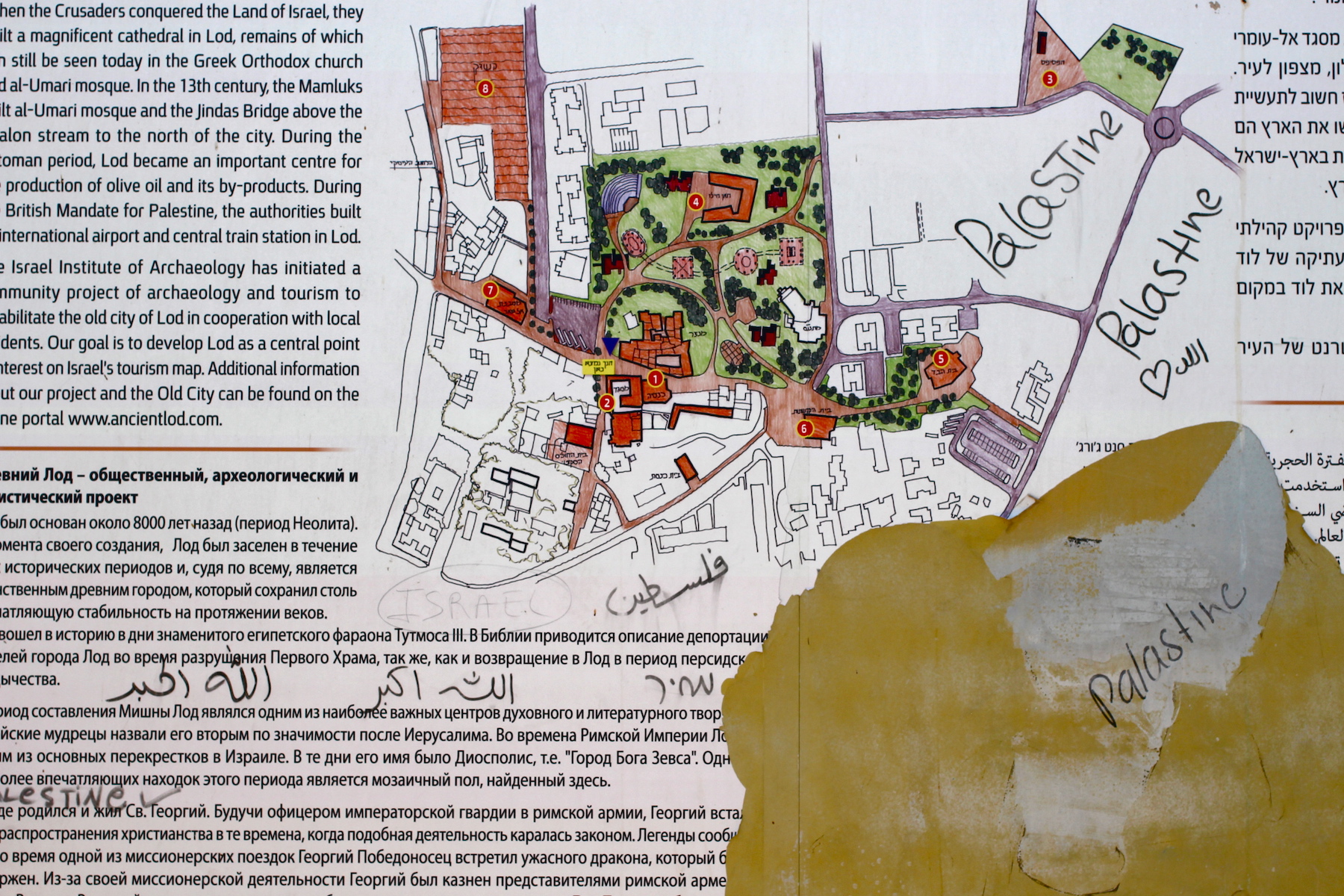
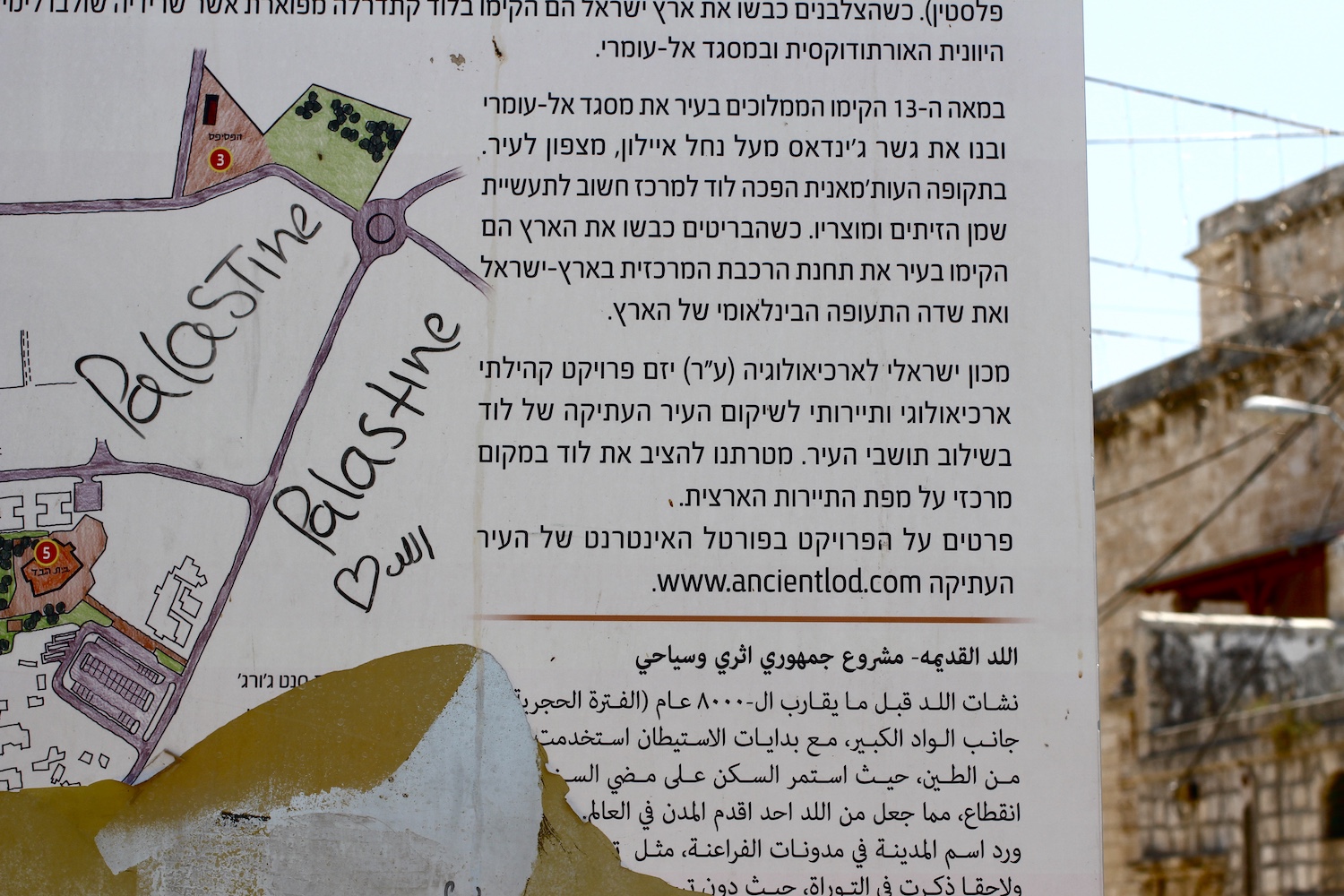
This continuing rampant development in Lydda could be understood as a Judaized mode of gentrification in a so-called mixed city; but, as I’ve written at length in recent years,23 it is vital that we grasp the settler-colonial hydra as both occupying and rewriting all of Palestine—not only Gaza or the West Bank. Lydda’s transformation is emblematic of the zionist enterprise across “1948 Israel,”24 marked by the corporeal, discursive, and concrete emptying and erasure of Palestinian space writ large. Connecting stakeholders in Lydda’s current phase of redevelopment with other towns and villages across Palestine—particularly those most acutely in the crosshairs of Jewish National Fund expansion—renders Zionism’s agenda of forcible transfer and dispossession crystalline: destroying the landscape, then hastily terraforming it for settlement while minimizing the land available to Palestinians.
Ceaseless Desert Grab
When I first encountered HQ Architects (HQA)—and, more importantly, as I scrolled through their “proposed” and “approved” plans—I felt genuine shock. Catchy GIFs, sun-kissed Photoshop renderings, and promises of a more “innovative” future aside—how hadn’t I heard of this before? In a way, though, I had—because upon closer inspection, HQA follows a familiar, long-enacted template of dispossession, displacement, and erasure of Palestinian cultural identity and land, which itself predates even the Nakba and British Mandate. Its website declares:
Building the stories of tomorrow, today—our curated showcase of projects that embody innovative, functional, and sustainable design, revealing the creativity and precision shaping the architecture of the future.25
Founded in 2008, today the firm consists of more than sixty “architects, designers, and researchers, driven by a pragmatic yet visionary design approach,” working across an urban design studio, landscape studio, housing studio, and R&D studio. Founding partner Erez Ella26 was born in Jerusalem and trained at Tel Aviv University, and HQA itself is headquartered in north Tel Aviv—the part of the city atop ruins of Sheikh Muwannis, Jammasin al-Gharbi, and al-Mas’udiyya.27 HQA’s office space resembles most others in the area and feels ripped from the Brooklyn office aesthetic—its website showcasing a collection of youthful, stylish art school graduates coworking alongside blurbs slinging “mindfulness” and “sustainability.” But make no mistake: This is but another arm of the zionist settler-colonial project. Because of the media’s propensity to cover only the most brutish and brutal iterations of settler violence, it’s likely most of us wouldn’t register a chic architecture firm as further entrenching Israel’s hyper-militarized/surveilled occupation of Palestine.
I came across HQA by way of scratching at the World Zionist Village (WZV), the latest, “most ambitious,” “largest philanthropic capital project in Israel’s history,” “powered by” the Jewish National Fund. It is astonishing that a name so bombastic could circulate—let alone be accompanied with a concrete plan: an entire campus and sprawling town designed to amplify the zionist agenda and condition new cohorts to appropriate and plunder the land—a “village of villages.”28 Despite the thousands—if not millions—of people who’ve taken to the streets (perhaps only since October 2023, but even that might have been enough) and despite the exposés, endless reposts of atrocity, teach-ins and -outs, and Occupation 101s, the WZV is moving full steam ahead, slated to open in 2028. The 48,000-square-meter project, led by HQA, extends across Diar Be’er al-Saba29 in the Naqab desert:
A campus shaped by climate, culture, and the movement of people… Its masterplan is shaped by three core principles: a central square as the symbolic and physical heart, a “village of villages” fostering exchange across programs and generations, and a design rooted in the site’s climate, topography, and heritage. Seven design parameters—authenticity, sustainability, flexibility, safety, phasing, functionality, and conversation—guided every decision, ensuring spaces remain purposeful and adaptable… The World Zionist Village is conceived not only as a place to visit, but as a framework for living, learning, and shaping the future of Zionism in the 21st century.30
Several diagrams on the site, including the “planning framework,” situate the WZV in an “urban meshwork” of a rapidly developing “Be’er Sheba,” as the settlement is called by the zionist project. Yet the scale of the campus still suggests an entrenched terra nullius31 for development zealots: grab up the desert, it seems to say. There’s plenty of it. We’re just getting started. This framing—reinforced by HQA mock-ups and schematics—distills the Naqab desert into a flat, seemingly suburban landscape not unlike the “master-planned” developments across the US Sunbelt (think Phoenix, Las Vegas, Tucson…) where grids of freeways and playgrounds, greened by stolen Indigenous water, miraculously bloom on what is otherwise “barren” land. From a February 2, 2026, Instagram post featuring additional angles of the future WZV: “A climate-responsive campus where education, culture, and community are woven into a shared civic landscape shaped by movement, exchange, and place.”32 The notion that climate-responsiveness and zionism could even share an ethos is preposterous.33 As Malm insists:
Destruction and construction are interpenetrating opposites that presuppose one another: the destruction of the planet is the construction of the fossil fuel infrastructure; the destruction of Palestine is the construction of racial colonies – or as Theodor Herzl put it in 1896: “If I wish to substitute a new building for an old one, I must demolish before I construct.”34
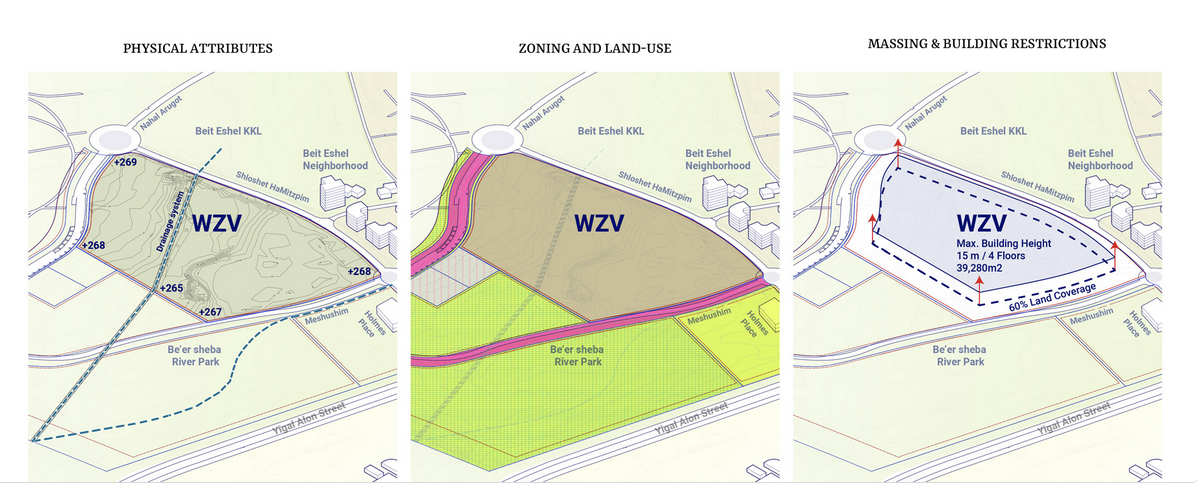
The HQA team and those cosigning these “sustainable blueprints” for burglary disregard millennia of Palestinian presence from the Jordan River to the Mediterranean Sea; it’s a rapacity either commonly dismissed and overlooked or praised as “ingenuity”—which ultimately serves to anchor the next generation of settlers into the scarred land. But who enables, sustains, and financially scaffolds this? It is not merely opportunistic expansion but the continuation of a deeply embedded project.
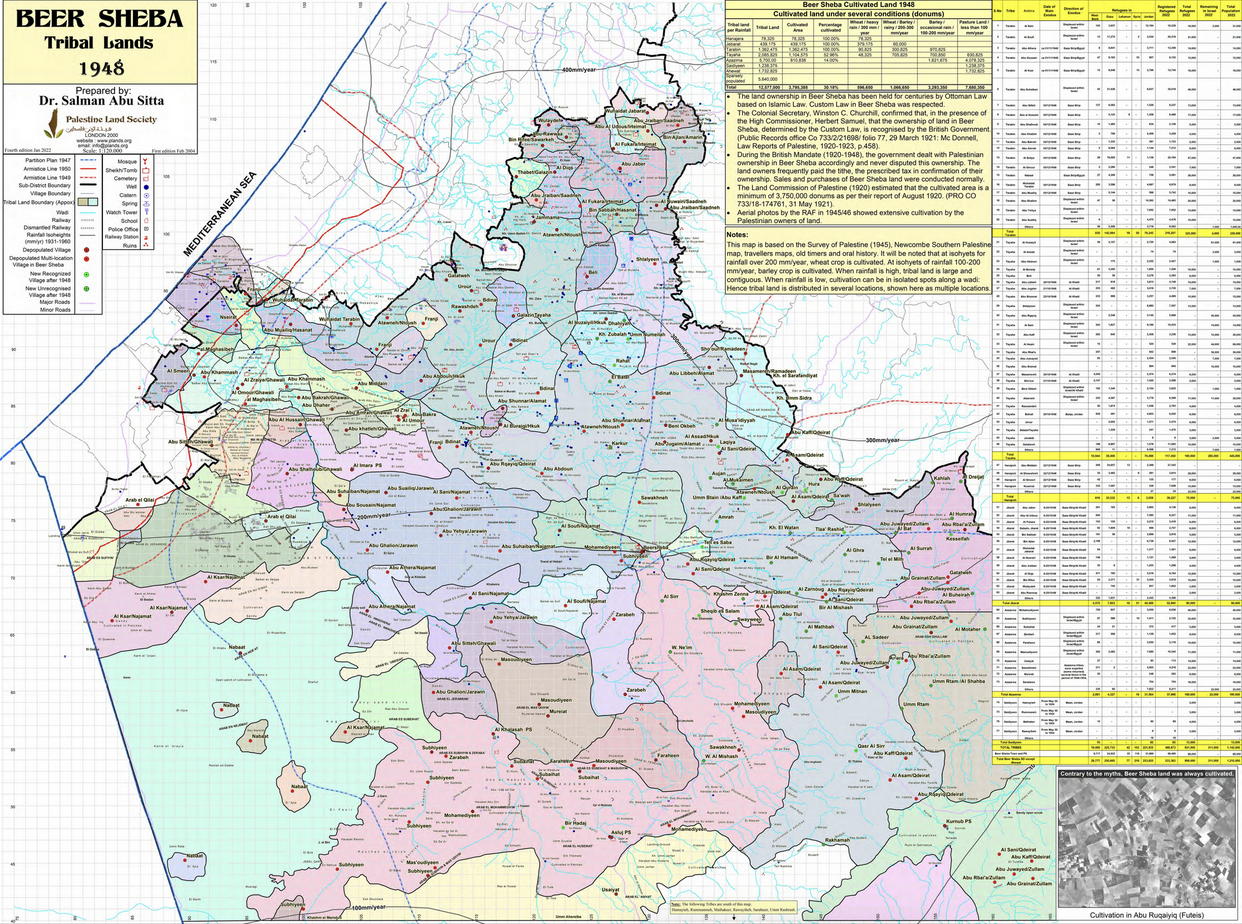
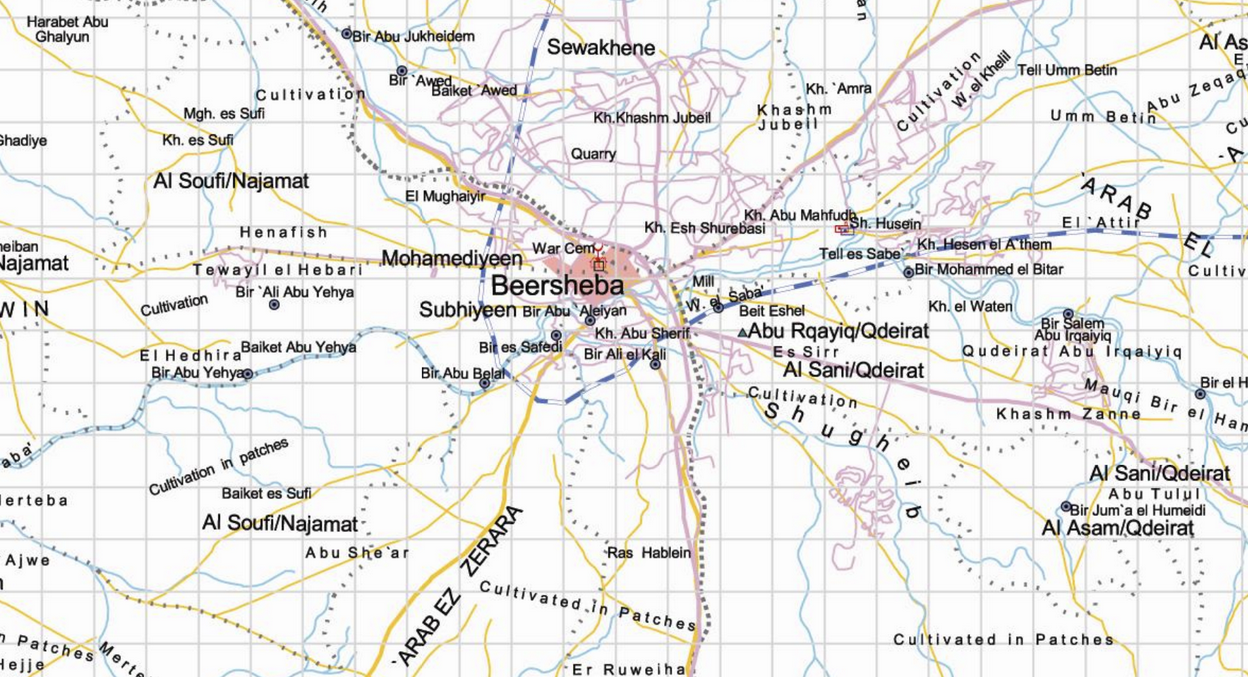
It behooves us to better understand the machinations of the Jewish National Fund–Keren Kayemet LeIsrael35 (JNF-KKL) because, after all, it is the World Zionist Village’s core funder. As JNF-USA CEO Russell Robinson has insisted, this is the “most significant Zionist initiative being pushed today, and it is being launched precisely in Be'er Sheba, the cradle of Zionism.”36 Focusing on the JNF’s founding as the bedrock for “Judaizing the territory”—by both brute force and policy—cuts through the fiction that the annihilation of Palestine and its people began solely as the Nakba unfolded. This is a 125-year-long (and counting) catastrophe predicated on the zionist drive for “redemption of the land”:
It would thus be accurate to trace the roots of the Nakba not to the battles of 1948, but to a much earlier historical stage—the first land purchases by the JNF and other settler-colonial organizations, including the Jewish Colonization Association, the Palestine Office of the World Zionist Organization, the Palestine Jewish Colonization Association, and others.37
The World Zionist Organization (WZO) was founded in 1897 by Theodor Herzl at the First Zionist Congress in Basel, Switzerland.38 By 1899, it had created the Jewish Colonial Trust, which in turn established an “Anglo-Palestine Bank” subsidiary in Palestine, and by 1901, the Jewish National Fund emerged as the WZO’s principal financial arm. The JNF’s first parcel of land comprised 200 dunams near Haifa, “gifted” by Russian Zionist Isaac Leib Goldberg during the Ottoman era in 1903. On December 17, 1917, at a Jewish National Fund Commission for England conference, Jacob Ettinger laid out the “tasks of the Jewish National Fund,” emphasizing that “Jewish settlement in Palestine can acquire a real national character only by a consistent national policy of colonization.”39 Through tactics such as afforestation, discriminatory leasing, and forced evictions, the JNF has functioned to launder Palestinian assets for Israel, accelerate forced depopulation (ethnic cleansing), and obstruct the Palestinians’ right of return to their land.40
While much is tangled and “legitimized” through legal proclamations, court orders, and state-sponsored demolitions,41 the JNF’s praxis can simply be distilled as unbridled land theft. It is therefore increasingly important to trace how the IOF, propped up by the JNF (and vice versa),42 ceaselessly threatens, torches, and forcibly removes Palestinians—along with their livestock, agriculture, and cultural heritage—across the Naqab, paving the way for the latest wave of annexation cloaked as progress.
On the WZV’s website, we’re greeted by a few mock-ups of vibrant student life alongside a giant sketch of Theodor Herzl’s face. In 1895, Herzl himself prophetically wrote:
When we occupy the land, we shall bring immediate benefits to the state that receives us. We must expropriate gently the private property on the estates assigned to us. We shall try to spirit the penniless population across the border by procuring employment for it in the transit countries, while denying it employment in our own country. The property owners will come over to our side. Both the process of expropriation and the removal of the poor must be carried out discreetly and circumspectly. Let the owners of immovable property believe that they are cheating us, selling us things for more than they are worth. But we are not going to sell them anything back.43
This imperative to pilfer persists today, just with slightly different jargon, images, and architects. The hasbara machine is undeterred by our efforts demanding an abolition of their atrocities.44 The WZV is but one of its projects now carried out within HQA’s broader project of razing and redeveloping the Naqab, and the firm’s 2019 proposal, “Negev Desert City,” exemplifies this phased annexation.45 HQA deems Negev Desert City as “the settlement of tomorrow”—signaling how the zionist expansionist project is always ongoing,46 al-Nakba al-mustamirra. The “settlement of tomorrow”47 means a ceaseless project of expropriation and manufactured anxieties; it relies on a pernicious falsity that (re)development is a stabilizing force—one that will bring safety to a nation constructed on ruins and still-smoldering fires.
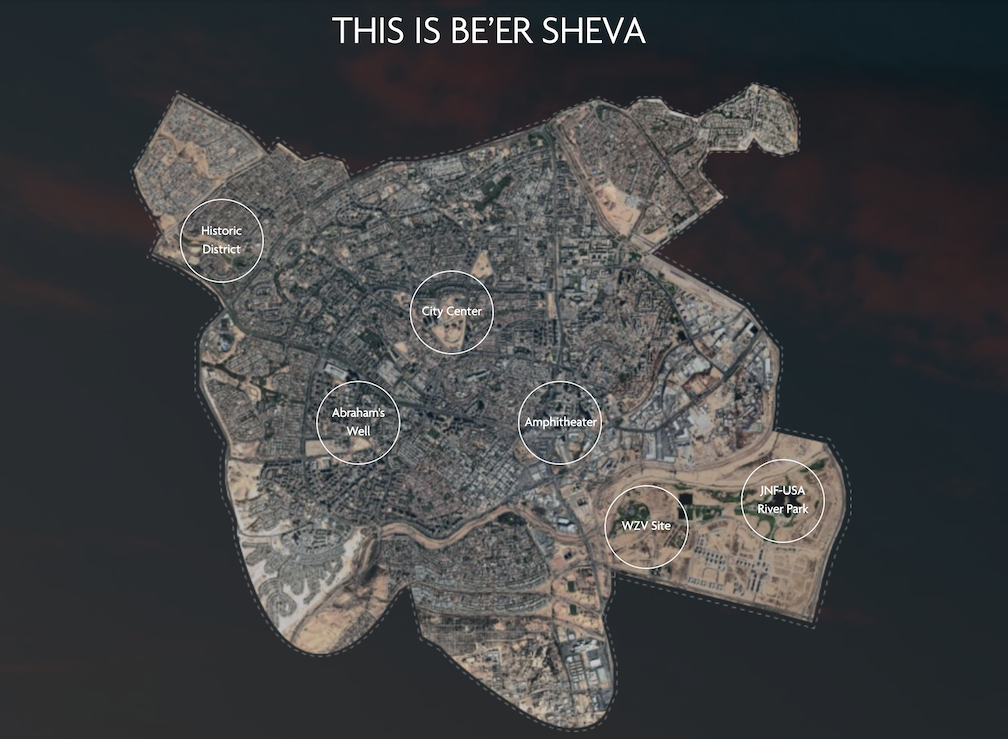
The JNF and the Israeli government—along with settler group Ayalim48 and the Or Movement, which calls its settlers “pioneers”—have intensified the “redevelopment” of the Naqab, with projects like “Blueprint Negev”49 and a civilian-military research center leading the sprawl.50 Technically and figuratively, these “blueprints” function as more than plans. They declare intention, inscribing and reproducing zionist claims on paper and across the landscape—at once an archive, a prophecy, and a tool for burying Palestinian pasts. Fans of this growth-by-dispossession laud Be’er Sheba as one of the “fastest growing cities in Israel”—in no small part because companies such as Microsoft, Dell, Wix, Rafael Advanced Defense Systems, Lockheed Martin, and Elbit Systems have nabbed large swaths of land to research, develop, and test the latest weaponry and surveillance systems used on Palestinians and exported to carceral regimes worldwide.
This is the context in which the World Zionist Village is being engineered: high schools, a “Zionist Education Center,” sports and dining facilities, accommodation for at least 700 students, a cinema, and a “content hub.” Managed by the Waxman Group of Engineers51—whose portfolio includes the Bnei-Zion data center, the Ramla data center, the Merkavim data center, the Highway 12 Eilat “bypass road,” the Jerusalem Light Rail, Samsung, office buildings for Toyota, Lexus, and H&M, Amazon data centers, and the Tel Aviv Courthouse—it sits within a dizzying array of infrastructures-as-settlements, all west of the “Green Line.”52
The World Zionist Village is not a slow, seemingly ad hoc encroachment53 as the “hilltop settlements” ever suffocating the hills and wadis of Palestine present.54 This is a publicly touted, massive-scale, relentless crusade—managed and funded by shareholders, politicians-and-pundits (pundits-as-politicians), and a slew of puppeteers—whose ethos will influence the ongoing extraction and terraforming of Palestine for generations to come.
A Myth of *Mudun Mukhtalata
Analyzing each of HQA’s projects—alongside the oral and recorded histories of the Palestinian villages and life erased and/or constantly imperiled—is imperative. Take, for instance, their new campus for the Bezalel Academy of Arts and Design, which opened in August 2023.55 Touted as a “phenomenal location in the heart of Jerusalem,” the campus sits atop the routinely erased—physically and cartographically56—Palestinian villages of Mamilla,57 nearby Lifta, and Deir Yasin,58 whose histories are further obscured by the campus’s very materials and infrastructure, and by the cheers of its supporters. In a spotlight in Wallpaper*, details of the project are elaborated:
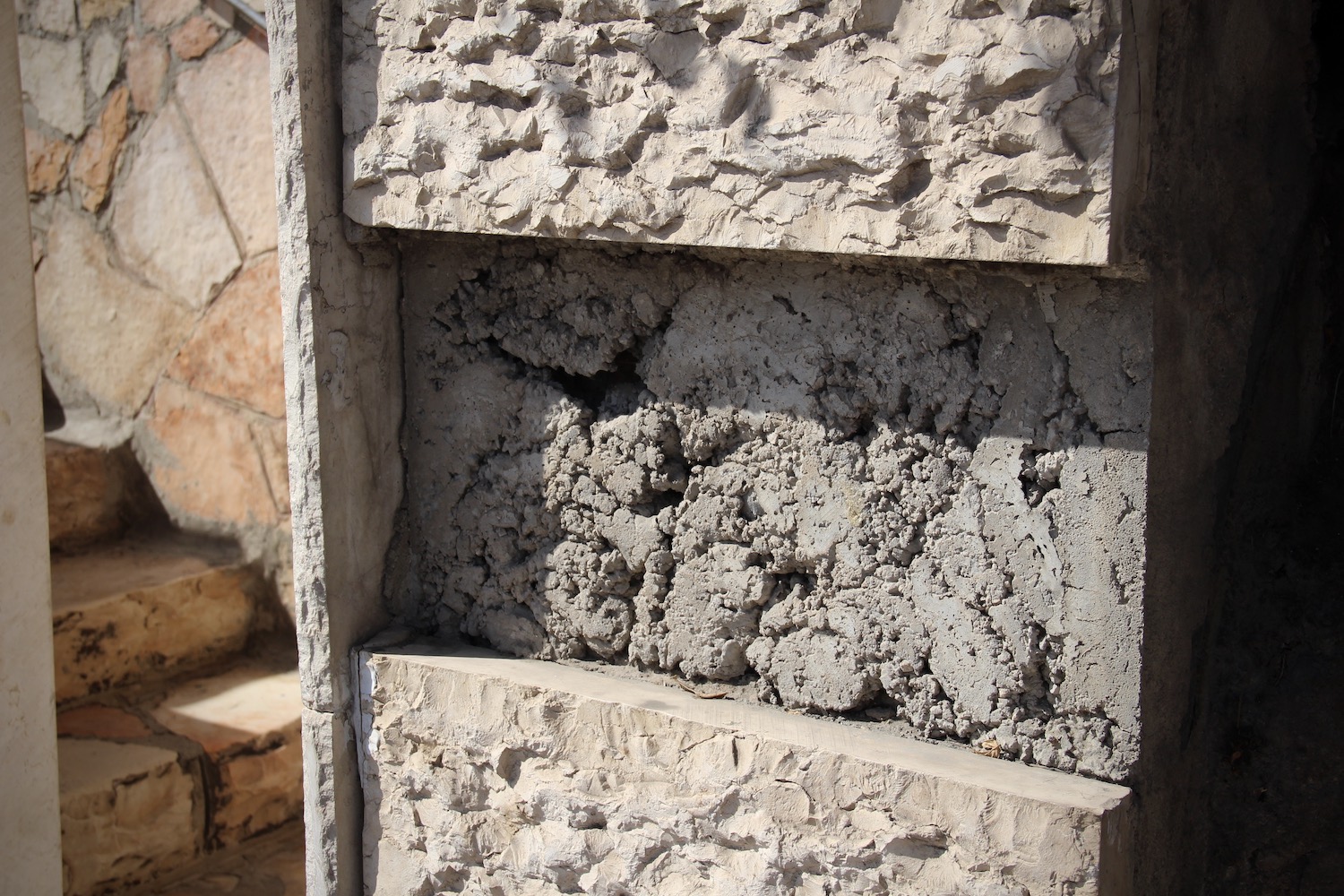
Materiality also played a key role in connecting the building to its context, as the team followed local planning regulations around material use, and created a concrete mix that uses local stone aggregates. “We did dozens of mock-ups in order to find the right mix and colour,” HQ Architects’ founder, Jerusalem-born Erez Ella, recalls. “We also showed that this building is very Jerusalem in the way it’s built, it has little alleys, many different vistas. We wanted to show that we can make it feel of its place, without being too literal about it.”59
The new campus, next to the Jerusalem Municipality city hall and across Jaffa Street from the Friends of Zion Museum,60 is nothing more than the latest fortification concretizing partition as settlers tighten their grip across Jerusalem and Palestine writ large, disguised as vacuous nothings like creative innovation and revitalization. The local stone that Ella references for this project slots into the grander 1968 master plan, built on a British Mandate–era municipal ordinance, which insisted on using the colloquial “Jerusalem Stone” (limestone) as cladding on exterior walls across the city.61
In Hollow Land, Eyal Weizman examines the political strategy of aestheticizing the occupation. By naturalizing new construction projects through the use of “ancient” materials and “seamless” integration into the terrain, colonization’s tactics are blurred into the cultural landscape of the city (in this case, al-Quds) and territorial claims of expansion are sustained and justified. Abundant use of the material insists upon a denial of the Green Line; a facadism that asserts itself as forcefully as the more glaring apartheid wall. The stone’s continuity—now repeated in Bezalel—works to blend pseudo-spirituality, invoking orientalist tropes of biblical times and earthly divinity of the “Holy City” into a “greater” Jerusalem. This refutes armistice agreements and international law while deepening a de facto annexation62 of the region. The fetishization of old stone and “Arabesque” detail secures the next contract, the next glossy spread, the next biennale-this-or-that.
In an interview with Weizman, Markus Miessen asks: “Do you think that—in the context of settlements and walls as well as in terms of your research on urban warfare—architects have committed crimes? Should some of them in fact be held accountable?”63 The question, though, is not whether these architects are complicit in the illegal occupation of Palestine—because the answer is a resounding yes. Like Léopold Lambert has argued, what architects design ultimately condones the system of organized violence behind it.64 We must extend this critique beyond the prison or the detention center to the sites and structures that sustain the zionist settler-colonial project: the classrooms, “think tanks,” agrivoltaics farms, malls, and shopping centers. Or, more bluntly, if your design firm isn’t actively anticolonial—not just insisting on but engaging in rematriating and healing the land and its Indigenous stewards—it remains complicit in the occupation. I believe the question, then, is what will we do about these plans, which are already very much underway? How do we—in our varied abilities and capacities—derail, blockade, abolish something so entrenched, so much greater than a single bulldozer, piece of policy, or munitions manufacturing plant?
You Wonder Why I Have Chosen This Road65
In November 2025, HQA posted an image on Instagram of a geode against a plain beige background: “A geode? Our materiality for Lod Culture Center draws from the duality of the geode: a solid, textured shell that reveals a bright, layered interior.”66 The next slide revealed a schematic of the building, with sharp angles, cement boards, bent metal/polymer, clear glass, and mashrabiya.67 The latter—ornate latticework techniques dating to the Abbasid period (750–1258)—is traditionally used to provide privacy and regulate airflow on balconies. HQA’s integration of this vernacular architecture pieces into a miscreant pattern of zionist settlers not only stealing Palestinian property but also continually appropriating its aesthetics.68
The geode69 reminds me of my longtime home in the Sonoran Desert, and the annual Tucson Gem and Mineral Show, where a range of settlers converge on occupied Tohono O’odham land to cosplay every trope of the Old (and New70) West while hawking stolen stones and sacred elements from around the world.71 We might read HQA’s reference to geodes as something stunning, formed over millions of years within sedimentary rock—not unlike zionist (and zionist-as-archaeologist) claims to Palestine, as old as time. Across Palestine, as throughout the so-called United States since its inception, selective preservation projects helmed by the Israel Antiquities Authority (IAA)72 are, as Nadia Abu El-Haj argues, the very backbone of how Israel reconfigures its cultural and political worlds while fashioning its specific national imagination and attendant territorial claims.73 The questions here, as always, remain—whose history is valued?74 And who is granted the power to undertake that valuation?75
In 2019, HQA completed the “Goldberg Masterplan”—a 186,000-square-meter vision to “reimagine a disused area in the heart of Lod—enhancing connectivity, upgrading infrastructure, and introducing new housing, commerce, and high-quality public space.”76 Through this plan, they propose to solve “decades of underinvestment” that have left the city’s core “disconnected,” “fragmented,” and “underserved.” Nowhere in any of their mock-ups are the words “Palestinian” or “Palestine” present; “diverse” becomes their catchall for every life rendered undesirable—furthering the invisibilization of all those resisting the zionist imperative of domination. Additionally, unlocking underutilized land, as highlighted in the vision, can be decoded as ways to further wring Palestinian land for capitalization—dare settler insatiability ever leave a dunam of land alone to breathe, to flourish?
The same phrases reappear throughout HQA’s 2018 “Shlomo Hamelech Masterplan” for Lydda, describing “neglected areas of low-density housing, marked by traffic congestion, poor pedestrian mobility, and fragmented public space.”77 Essential to this new “connected, livable” version of the city is Road 443, which—as B’Tselem reported in 2011—was made possible through the expropriation of thousands of dunams of Palestinian land for the highway’s expansion, along with the prohibition of Palestinians’ access to the road.78 By 2024, Finance Minister Bezalel Smotrich and Transportation Minister Miri Regev announced:
Fast-tracking of the planning and implementation of a road connecting Gush Talmonim [settlement cluster] to Route 443. The road is intended to shorten the journey to Jerusalem, passing through Palestinian lands and areas of Palestinian villages where there is currently no settler presence. Settlers plan for the road to facilitate the expansion of the population in the area by tens of thousands of settlers.
These infrastructures serve as active guarantors of an expedited zionist future, materially and ideologically obscuring the violence of the apartheid state they depend on. A September 2025 Instagram post by World Zionist Village emphasized their being honored as a featured presentation and Silver Sponsor at the Zero eMission Buildings 2025 conference by Alfa Sustainable Projects:
The [World Zionist] Village will bring together cutting-edge architecture, smart infrastructure, and a commitment to carbon-conscious design. From immersive educational spaces to environmental innovation zones and a vibrant living campus, this project exemplifies the future of meaningful place-making.79
Alfa, not dissimilar from HQA, boasts projects including the “Nevatim Net Zero Energy Israel Air Force Construction Headquarters” and campuses for Microsoft and Google in Israel. What environmental value is the “first Net Zero Energy building within the Israeli Defense Forces”?80 What is “carbon-conscious design” amid forests of JNF-planted trees—from Lydda to Haifa to Diar Be’er al-Saba—intended to conceal Palestinian lives and land tirelessly dispossessed? This begs a reassessment and criticism of projects veiled as eco-friendly, that work to rebrand ecocide.
The subtext of these HQA schematics is, plainly, a series of flashy “redevelopment” projects that solely serve zionist settler expansionism—cloaking violence, obscuring Palestinian history, rendering the brazen state-building project persisting over the past 125+ years as more attractive. How much more of this “sustainable” design can be packed into an unsustainable, life–world depleting (genociding) endeavor? What is our threshold for collaborating—and conferencing, networking—with its colluders? The answers supersede the discipline of “architecture,” yet the discipline itself remains central to the occupation of Palestine.
Postscript:
I won’t hide behind editorial timelines, as this essay was manically penned in mid-February 2026—hungry to share my findings well ahead of the World Zionist Village’s inauguration. Since then, we’re dizzied to track the number of casualties and injuries not only across Palestine but in Iran, Iraq, Lebanon, Bahrain, and beyond—all due to this latest iteration of US-Israel barbarity. Schools, mosques, cultural landmarks, markets, fields, and gardens all decimated by bombs we fund, complicity in a machine we, in varied degrees, cave to. Nakba, compounding. I work through edits, whiplashed by ceasefire—no ceasefire—seized ship—Hegseth shouting lethality lethality warwarwar from the podium. When I toggle to the Jewish National Fund’s home page (April 2026), a new addition to the header’s call-to-action links is a button for “Stock Transfer Instructions.” This leads to a one-pager for transfers with account information from Morgan Stanley. With over half a billion dollars in assets (per its 2024 tax filing), and buzz phrases in its Statement of Program Service Accomplishments, the organization is trumpeting how it is “greening the desert.” Maybe the minutiae appear unimportant and banal, but this blank-check complicity is what propels atrocity—through Palestine, across the region, even as connected with your institution and town. We must consider not only this pipeline of funding but the very structures the financiers inhabit, as well as the architects’ drafting tables and lecturers’ podiums. Undeniably, this constellation of coconspirators is prepared to seize these lands as soon as the white phosphorus clears, as part and parcel of the settler-colonial agenda, more than a century old; and my demand of you: What will you do, what are you doing, to end this cycle?
-
Salman Abu Sitta, “Return to Al-ma’in,” Forensic Architecture, June 13, 2025, link. ↩
-
This same “peace activist” filled my DMs in the weeks following October 7, 2023, with vitriol and blame for anyone and anything Palestinian or in solidarity against this genocide. ↩
-
Lod is the Israeli name for Lydda. Like the hasbara, according to The Globe and Mail in 2013: Patrick Martin, “Lod: Israel’s Version of Murder City,” Globe and Mail, January 16, 2013, link; or The Times of Israel in 2018: Alexander Shapiro, “Lod: Shared Society in Israel’s “Murder City,” Times of Israel (blog), October 24, 2018, link. ↩
-
See (among many more examples), Liz Rose, “The ‘NYT’ Turns Jaffa into an ‘Ancient Neighborhood’ of Tel Aviv Revived by Israeli Realtors and Chefs,” Mondoweiss, March 18, 2019, link. ↩
-
While I try to avoid citing official Israeli narratives such as hasbara, engaging them is necessary to understand the logic used to justify ongoing ethnic cleansing. In May 2021, Rabbi Shmuel Eliyahu, the chief rabbi of Tzfat, decried: “The battle for Lod isn’t just about what’s going on here… It’s also about Ramle, about Jaffa, about Haifa, and about Jerusalem. Maybe it’s even chiefly about Jerusalem, because the Arabs in Gaza, as well as those in Judea and Samaria, have one single goal—to drive us out of the Land of Israel, little by little… If we give up on Lod, we won’t remain in Jerusalem.” He continued, “And we intend to protect Jerusalem, and the protection for Jerusalem is right here, in Lod.” See Yoni Kompinski, “‘If We Give Up on Lod, We’ll Lose Jerusalem Too’,” Israel National News, May 20, 2021, link. ↩
-
To explore how the illegal settlement process across Palestine is expedited by these agencies, see Nefesh B’Nefesh’s “Community and Housing,” link. See also updates from DropSite News on Pal-Awda NJ/NY’s protests against settler recruitment fairs at link. ↩
-
The Jewish Agency runs 18 absorption centers throughout Israel. Each center includes “classrooms for lessons in Hebrew, preparation for life and employment in Israel, events, activities, and cultural presentations, and serve several thousand olim each year.” From the Agency’s FAQ section: “How is eligibility for Aliyah determined?” “Law of Return, 1950,” 1. Every Jew has the right to immigrate to Israel. See link. ↩
-
Its complexities can’t fit in this space, but Aliyah can be understood at its simplest as settlement in Israel, that is, settler colonial accumulation by dispossession. According to the Jewish National Fund: “Well-educated, passionate olim (new residents from North America) are more essential to Israel’s future than ever… In 1901, Jewish National Fund’s focus was on buying land and planting trees to build a nation. Today, Jewish National Fund is planting people in Israel, strengthening the nation through 21st Century aliyah with partner Nefesh B’Nefesh. With the goal of nation building, Jewish National Fund infuses Israel with thousands of skilled and idealistic new citizens, who drive economic growth and development.” “Fulfilling the Dream of Aliyah,” Jewish National Fund, link. Speaking to Muna el-Kurd in her family’s home in Sheikh Jarrah, East Jerusalem, Brooklynite Yaakov Fauci justifies this theft: “If I don’t steal your house, someone else will.” “Video Shows Israeli Settler Trying to Take Over Palestinian House,” Al Jazeera, May 4, 2021, link. ↩
-
Al-Awda: The Palestine Right to Return Coalition, “On Israel’s Little-Known Concentration and Labor Camps in 1948–1955,” October 19, 2014, link. See also Salman Abu Sitta and Terry Rempel, “The ICRC and the Detention of Palestinian Civilians in Israel’s 1948 POW/Labor Camps,” Journal of Palestine Studies 43, no. 4 (2014): 11–38. ↩
-
Eetta Prince-Gibson, “Refugees in Israel Fear They Could All Be Targets of Next Lynch Mob,” Haaretz, October 22, 2015, link; “Israel-Palestine: Lynching, Crackdowns and Deaths – Here's What Happened Last Night,” Middle East Eye, May 13, 2021, link; Open Letter, “Palestinian Community in Lydda Calls for International Protection from Israeli State-Sanctioned Pogroms,” Mondoweiss, May 13, 2021, link. ↩
-
From nearly two decades ago, see Isabel Kershner, “Polishing a Lost Gem to Dazzle Tourists,” New York Times, July 9, 2009. See also New York War Crimes, “Exposing The New York Times: The Paper of Zionist Record,” link. ↩
-
Francesco Anselmetti, “Lydda Junction,” Salvage, October 29, 2021, link. ↩
-
During the Unity Intifada (spring 2021) and the unrest radiating from Sheikh Jarrah, Israel’s imposed state of emergency and dog whistles from Lydda mayor Yair Revivo and other Israeli officials inflamed violence across the town, further entrenching cycles of police brutality and impunity against Palestinian resistance. See “Israel/OPT: Cycle of Impunity Leaves Civilians Once Again Paying the Price amid Escalation of Hostilities,” Amnesty International, May 12, 2021, link. ↩
-
Haim Yacobi, “The Architecture of Ethnic Logic: Exploring the Meaning of the Built Environment in the ‘Mixed’ City of Lod, Israel,” Geografiska Annaler, Series B, Human Geography 84, no. 3/4 (2002): 171–187. See also Oren Yiftachel and Haim Yacobi, “Urban Ethnocracy: Ethnicization and the Production of Space in an Israeli ‘Mixed City,’” Environment and Planning D: Society and Space 21, no. 6 (2003): 673–693. ↩
-
Rabea Eghbariah, “Toward Nakba as a Legal Concept,” Columbia Law Review 124, no. 4 (2024): 887–992, link. See also Walid Khalidi, “Plan Dalet: Master Plan for the Conquest of Palestine,” Journal of Palestine Studies 18, no. 1 (1988): 4–33. ↩
-
Read the Interactive Encyclopedia of the Palestine Question: Sana Hammoudi, “Lydda, 9–13 July 1948: A City-Wide Massacre Culminating in the Death March,” link. Also see the work of George Habash: The Good Shepherd Collective, link. ↩
-
Spiro Munayyer, “The Fall of Lydda,” Journal of Palestine Studies 27, no. 4 (Summer 1998): 80. It’s worth underscoring that this account in the journal was introduced and elaborated upon by Walid Khalidi, the cofounder and honorary president of the Institute for Palestine Studies (IPS), who passed away on March 8, 2026. He was born in Jerusalem, Palestine, on July 16, 1925. As IPS’s obituary recounts, “Khalidi was the first to reveal [Israel’s] master plan for the occupation of Palestine and the expulsion of its people, known as ‘Plan Dalet,’ which he did in the early 1960s. His books All That Remains and Before Their Diaspora are considered foundational works for understanding the Nakba and what befell Palestine and its people. In addition to these seminal works, Khalidi authored more than 40 books and hundreds of studies, articles, and research papers.” See “The Passing of Walid Khalidi, Co-Founder and Honorary President of the Institute for Palestine Studies (1925–2026),” Institute for Palestine Studies, March 8, 2026,link. ↩
-
Munayyer, “The Fall of Lydda,” 96. ↩
-
Anselmetti, “Lydda Junction.” ↩
-
Anselmetti, “Lydda Junction.” ↩
-
Anselmetti, “Lydda Junction.” ↩
-
“Many Palestinians blame the local Garin Torani, a cell of the settler movement that seeks to further Judaize Israel’s ‘mixed cities,’ for much of the violence. Since the events of May 2021, it seems that the Garin Torani has decided that Lydd is holy only for Jews… ‘There is currently an attempt to privatize the security of local residents through the establishment of Jewish militias under the name ‘Guardians of Lod,’ (Lydd’s Hebrew name) to try and engineer and institutionalize aggression against the Arabs in the city. [Mayor Yair Revivo] has given them a control room, headquarters, and offices, and has allowed them to install cameras across the city.” See Samah Salaime, “Israeli Settlers Have a New Target, and It’s Not in the West Bank,” 972 Magazine, December 9, 2021, link. ↩
-
See my recent work, which branched off my doctoral dissertation (2021): “Al-Manshiyya: Bordering and Spatializations of Difference on the Vanishing Palestinian Coastline,” Urban Transcripts 3, no. 3 (Autumn 2020), link; “South, and by the Sea: Palestine and Arizona,” Warscapes, January 20, 2019, link; and “Active, Still, Reclamation,” Society and Space, July 5, 2021, link. ↩
-
For an elaboration on what’s meant by “’48 Palestine (Palestinians),” see Maha Nassar, Brothers Apart: Palestinian Citizens of Israel and the Arab World (Stanford University Press, 2021). ↩
-
An evergreen reminder: Military service in the IOF is compulsory, and people can toggle between “civilian” and “reservist” depending on the state’s demands. This means that the Israeli barista, preschool teacher, and “peace activist” was/is an active element in the predation of Palestine and its people; the artists and architects who espouse egalitarianism and justice can be the same individuals operating Elbit UAVs or firing IWI bullpup assault rifles: “Men are expected to serve for a minimum of 32 months and women are expected to serve for a minimum of 24 months,” link. As my compas insist: What does it mean to take seriously—and explicitly name—the more mundane expectations, practices, aesthetics, people, and ways of living and working as part of, and productive of, the conditions of occupation and apartheid? How are these conditions trained or inscribed into images, into people, into everyday life? ↩
-
An integral primer to the pseudo-Bauhaus style of Tel Aviv and “White City” propaganda bolstering a metropolis “built from the dunes” is Sharon Rotbard’s White City, Black City: Architecture and War in Tel Aviv and Jaffa (Pluto Press, 2015), and Mark Levine’s Overthrowing Geography: Jaffa, Tel Aviv, and the Struggle for Palestine, 1880–1948 (University of California Press, 2005). ↩
-
See Lobna Sana, “The Architect’s Role in the Unrecognized Naqab—Refusing to Wait,” Avery Review, no. 70 (February 2025), link. ↩
-
HQ Architects, “World Zionist Village.” ↩
-
See Taylor Miller, “Silicon Wadi, Silicon Desert,” Avery Review, no. 70 (February 2025), link. ↩
-
This entails more than any footnote can hold. But, for starters, see Andreas Malm, The Destruction of Palestine Is the Destruction of the Earth (Verso Books, 2025), and Shourideh C. Molavi, Environmental Warfare in Gaza: Colonial Violence and New Landscapes of Resistance (Pluto Press, 2024). ↩
-
Malm, The Destruction of Palestine Is the Destruction of the Earth, 64. ↩
-
JNF-KKL is a common acronym signposting Jewish National Fund activities. In 1953, the JNF dissolved and reorganized as an Israeli company, Keren Kayemet LeYisrael. Seven years later, the brunt of JNF-KKL land was transferred to the newly formed Israel Land Administration, further complicating and simultaneously blocking Palestinian sovereignty. For more, see Adalah: The Legal Center for Arab Minority Rights in Israel, “Israel Land Administration Law,” Israel Law Resource Center, February 2007,link. ↩
-
Jerusalem Post Staff, “JNF-USA to Build NIS 1.2b. World Zionist Village in Beersheba,” Jerusalem Post, August 17, 2025, link. ↩
-
Yaara Benger Alaluf, “Why Does the JNF Still Exist?” 972 Magazine, July 8, 2021, link. ↩
-
Technically, Hermann Schapira, a Lithuanian Zionist rabbi, was the first to suggest the founding of the Jewish National Fund, and in the wake of Russian pogroms in the 1880s, invented the infamous “blue box” tzedakah boxes to collect money for the nascent JNF. ↩
-
Jacob Ettinger, The Tasks of the Jewish National Fund, Head Office of the Jewish National Fund, 1918, 3. ↩
-
Alaluf, “Why Does the JNF Still Exist?” ↩
-
See Forensic Architecture, “Destruction and Return in Al-Araqib,” June 27, 2017, link; BADIL Resource Center for Palestinian Residency and Refugee Rights, “The Naqab Battle: A Battle for the Land and the People,” link; Adalah: The Legal Center for Arab Minority Rights in Israel, “Advancing the Human Rights of Arab Bedouins in the Naqab,” August 9, 2020, link. ↩
-
See Palestine Land Society, “Financing Racism and Apartheid: Jewish National Fund’s Violation of International and Domestic Law,” August 2005, link. ↩
-
Alaluf, “Why Does the JNF Still Exist?” ↩
-
Jewish National Fund-USA, “Breaking the Story: How Media Shapes Israel's Narrative,” YouTube, November 11, 2025, link; Jewish National Fund-USA, “How Do We Connect Our Children to Israel?,” YouTube, November 11, 2025, link. ↩
-
See, for example, Monica Tarazi, “Planning Apartheid in the Naqab,” Middle East Research and Information Project, December 26, 2009, link. ↩
-
In a speech by then-Senator John F. Kennedy on August 26, 1960, to the Zionists of America Convention, he declared: “Prophecy is a Jewish tradition, and the World Zionist movement, in which all of you have played so important a role, has continued this tradition. It has turned the dreams of its leaders into acts of statesmanship. It has converted the hopes of the Jewish people into concrete facts of life. When the first Zionist conference met in 1897, Palestine was a neglected wasteland. A few scattered Jewish colonies had resettled there, but they had come to die in the Holy Land, rather than to make it live again in greatness. Most of the governments of the world were indifferent… Time will judge whether Israel will continue to exist. But I wish I could be as sure of all my prophecies as I am of my flat prediction that Israel is here to stay. For Israel was not created in order to disappear—Israel will endure and flourish.” American Presidency Project, link. ↩
-
Ayalim is a settler group founded in 2002: “[Its founders] decided to invest all the money from their discharge grants and purchase two mobile homes, which they placed in Ashalim in the Negev. Ayalim was born, and since then has founded over 22 student villages, alumnus compounds and community seeds, attracting hundreds of young Israelis every year, who choose to join the organization and live in the Negev, Galilee or Israel’s social periphery.” See link. ↩
-
Blueprint Negev, as Rebecca Manski reports, was introduced in 2005—around the same time as Ariel Sharon’s “Disengagement Plan” from Gaza: “The publicity push for Blueprint Negev intensified in early 2006, when Israeli President Shimon Peres lauded its first planned development town as a new beacon for Americans ‘who want to make aliyah and live in style.’ Soon, he told the Israeli public, there would be a haven for wealthy young Americans in Israel’s Negev Desert. There would be homes with central air conditioning and other Western amenities, a lavish community center with gym facilities and an Olympic-sized swimming pool. American Jewish leaders continue to promote Peres’s vision for the Negev. It will be ‘pure Zionism,’ says Daniel Mattio, the chairman of the Chicago Israel Philanthropic Fund, which was created in 2008 to speed the rate of Jewish settlement in the Negev.” Rebecca Manski, “Blueprint Negev,” Mondoweiss, November 9, 2010, link. And, directly from the source of annihilation, see JNF, “Community Building–Our Blueprint Negev Strategy,” link. ↩
-
This project is being constructed in cooperation with the Defense Ministry’s Weapons Development and Technology Infrastructure Administration (MAFAT). Lazar Berman, “Cabinet Pledges NIS 1.2 Billion to Beersheba for New Light Rail, Defense R&D Hub,” Times of Israel, November 9, 2025, link. Also in lockstep, the IOF’s new “southern relocation administration,” part of the Israel Ministry of Defense, is expanding a large-scale training complex at Nevatim Air Force Base, aligning with the “rich tri-sectoral cyber ecosystem” of Ben-Gurion University, Gav Yam Advanced Tech Park, and the National CERT (operated by the Israel National Cyber Directorate). ↩
-
As Diana Butu writes, “Simply because Israelis and Palestinians in these cities live near one another does not erase the effects of systemic discrimination or the decades of racism and incitement.” See Diana Buttu, “The Green Line Never Existed,” Arab Studies Institute 29, no. 2 (Fall 2021): 144–147. ↩
-
Jewish National Fund-USA, “Why the World Needs the World Zionist Village,” Youtube, November 11, 2025, link. ↩
-
See also HQA’s “Gilo 2045” project to even more fully understand the firm’s role in the settlement enterprise: link. Constructed atop the Al Slayeb area of Beit Jala, as well as other areas from Al Sharafat and Beit Safafa, as a “ring settlement” in 1970–1973, nothing about Gilo’s present-day ballooning is neutral. “Located on Jerusalem's southern edge near the seam line, Gilo forms an almost self-contained urban island. Both part of the city and apart from it,” HQA states. This is a pretty audacious way to skirt the illegality of the town’s presence and proliferation; Gilo, as with all settlements in the West Bank, is technically in violation of the Fourth Geneva Convention (1949), UN Security Council Resolution 2334 (2016), the Hague Regulations (1907), and the International Covenant on Civil and Political Rights. But as the current genocide of Gaza makes clear: international law means nothing. “Expansion of Gilo Settlement: A Strategic Plan to Isolate Bethlehem and Undermine Palestinian Rights,” POICA, May 12, 2025, link. ↩
-
Hannah Brown, “Bezalel Academy’s Triumphant Return to Downtown Jerusalem,” Jerusalem Post, August 4, 2023, link. ↩
-
Always, reference: Salman Abu Sitta, The Atlas of Palestine 1917–1966 (Palestine Land Society, 2010). See also Jerusalem Story Team, “Palestinian Villages Depopulated in 1948,” Jerusalem Story, January 25, 2022, link. ↩
-
Asem Khalidi, “The Mamilla Cemetery: A Buried History,” Jerusalem Quarterly, no. 37 (2009), link. ↩
-
Terry Rempel, “Dispossession and Restitution in 1948,” in Jerusalem 1948: The Arab Neighbourhoods and Their Fate in the War, ed. Salim Tamari (Palestine Studies and Badil Resource Center for Palestinian Residency and Refugee Rights, 2002), 217; and Sana Hammoudi, “The Deir Yasin Massacre, 9 April 1948: An Ominous Sign of Worse to Come,” Interactive Encyclopedia of the Palestine Question, link. ↩
-
Ellie Stathaki, “SANAA’s Bezalel Academy of Arts and Design Is Designed to Connect with the Heart of Jerusalem,” Wallpaper, November 10, 2022, link. ↩
-
From the Friends of Zion Museum website: “The Friends of Zion Museum opened in 2015 in the heart of Jerusalem with the help of thousands of supporters of Israel worldwide. It presents a technologically advanced and interactive experience that tells the stories of both the dream to restore the Jewish people to their historic homeland and the brave non-Jews who assisted them in realizing this dream… The Friends of Zion Museum serves as a platform for fighting BDS and anti-Semitism internationally. The Museum is a non-profit organization operating in Jerusalem and supported by friends from all over the world.” “About the FOZ Museum,” FOZ Museum, link. ↩
-
For nuance on regulations over time, see Eyal Weizman, Hollow Land: Israel’s Architecture of (Verso, 2007). See also Andrew Ross, Stone Men: The Palestinians Who Built Israel (Verso, 2021). ↩
-
Splitting hairs over the status of “West” Jerusalem and “East” Jerusalem ignores/denies the fact that the entirety of Al-Quds, and Palestine, is colonized by Israel. For more details on specific neighborhoods’ plights, see Forensic Architecture, “Sheikh Jarrah: Ethnic Cleansing in Jerusalem,” June 20, 2022, link; Al-Haq, “Sheikh Jarrah and Silwan: Ongoing Nakba and Israeli Dispossession of Palestinians,” May 27, 2021, link. See also the ActiveStills photo collection from Jerusalem link. ↩
-
Markus Miessen, “Settlement Archaeology: A Conversation with Eyal Weizman,” Bidoun, no. 5 (Fall 2005), link. ↩
-
Léopold Lambert, “Outrage: Architects Should Not Design Without Considering the Politics That They Are Tacitly Sanctioning,” Architectural Review, June 15, 2018, link. ↩
-
In an interview with Mahmoud Soueid, Lyddawi George Habash recounts the horrors of Zionist gangs killing his sister: “You wonder why I have chosen this road, why I became an Arab nationalist. This [violence] is what Zionism is all about. After all this, they talk about peace. This was the Zionism that I knew, that I saw with my own eyes.” See George Habash and Mahmoud Soueid, “Taking Stock: An Interview with George Habash,” Journal of Palestine Studies 28, no. 1 (1998): 86–101. ↩
-
I text my brilliant, sage architect friend, a few nights ahead of Ramadan 2026: “Does how I write this make sense?” He quickly replies: “About to board for Istanbul. But mashrabbiya from Arabic verb Sharaba (to drink); appropriated by orientalists (espec. Painters and writers) to frame ideas of desire, seduction, mystery etc. missing the boat entirely on worlds of environmental care and awareness (jali from India, qamaririyah from Palestine etc.). Fucking thieves.” ↩
-
For example, see “Jaffa: From Eminence to Ethnic Cleansing,” BADIL, no. 39–40 (Autumn 2008–Winter 2009), link, as well as the trove of archival images, documents, and ongoing projects by RIWAQ, link. ↩
-
For a heck of a tangent, see Microsoft Azure’s geode pattern of data storage, link; then read “No Azure for Apartheid,” link. ↩
-
While I cringe to cite the New York Times, this is a textbook instance of how its glossy coverage whitewashes socioeconomic plight and Indigenous dispossession, in the interest of, for example, the Airbnb-ification of desert towns and second- and third-tier cities: Abbie Kozolchyk, “Tucson, Ariz.: Western Skies and Competitive Home Prices,” New York Times, April 16, 2025, link. ↩
-
Rachel Monroe, “The Search for the Perfect Stone,” New Yorker, February 21, 2023, link. ↩
-
See, for example, the 2024 IAA preliminary report “Lod, Khan el-Hilu,” link. ↩
-
Nadia Abu El-Haj, “Reflections on Archaeology and Israeli Settler-Nationhood,” Radical History Review, no. 86 (Spring 2003): 149–164. Tawfiq Da’adli writes: “[Archaeologists] are conducting ‘test pits’ in the area, a method to determine the depth of archaeological layers by mechanically digging into them and effectively destroying portions of ruins before they can be properly excavated. These pits help determine how much funding the [Israel Antiquities Authority] IAA will require from the developer to effectively excavate the site before building commences… Normally, the authority secures its required funding to begin the next phase of excavation, in which excavation squares are opened and archaeologists dig to the planned depth of the future building. But in an effort to restrict the scope of the IAA’s investigations, the developer minimized its budget and got court approval to bring in consultants instead, some of them ostensibly archaeologists. After IAA archaeologists excavate the little their budget allows for, the site will be released back to the developer, who is free to clear it entirely. I am certain of what lies—and will be lost—beneath this land.” Tawfiq Da’adli, “In the Name of ‘Urban Renewal,’ Israel Is Trampling Lod’s 2,000-Year-Old Heritage,” 972 Magazine, December 22, 2025, link. ↩
-
Loop: Tamer Nafar “Ebn al Lyd,” Youtube, July 6, 2022, link. ↩
-
Nadia Abu El-Haj, Facts on the Ground: Archaeological Practice and Territorial Self-Fashioning in Israeli Society (University of Chicago Press, 2001); Nadia Abu El-Haj, “Translating Truths: Nationalism, the Practice of Archaeology, and the Remaking of Past and Present in Contemporary Jerusalem,” American Ethnologist 25, no. 2 (1998): 166–188. ↩
-
B’Tselem, “Route 443–West Bank Road for Israelis Only,” January 1, 2011, link. ↩
-
Alfa Projects, “Nevatim Net Zero Energy Israel Air Force Construction Headquarters,” link. ↩
Taylor Miller is a writer and researcher based between the Sonoran and Chihuahuan Deserts. She earned her Ph.D. in political geography from the University of Arizona, and is a Contributing Editor for the Avery Review.